 Driving Road Rules
Korea's expressways have strict speed limits, fixed cameras every few km, and signs in Hangul. Here's what every foreign driver needs to know.
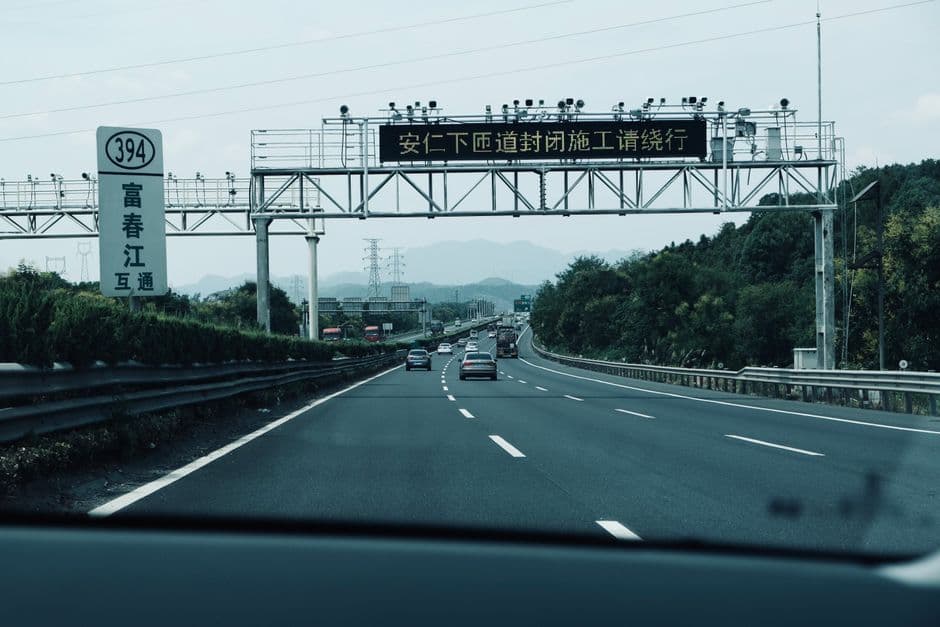
Korea's Gyeongbu Expressway (Route 1) runs 416 km from Seoul to Busan with speed cameras positioned every 2–4 km. Ignore the posted limits and you will receive a fine in the mail before you leave the country, linked to your rental car contract.
Speed Limits by Road Type
Korean law sets limits under the Road Traffic Act (도로교통법). These are the national defaults:
| Road type | Default limit | With variable sign |
|---|---|---|
| Motorway / Expressway (고속도로) | 110 km/h | Up to 120 km/h |
| Urban expressway (도시고속화도로) | 90 km/h | , |
| General national road (일반국도) | 80 km/h | , |
| Urban arterial road | 60 km/h | , |
| Residential / school zone | 30 km/h | , |
School zones (어린이보호구역) drop to 30 km/h and carry doubled fines under the 민식이법 (Minsiki Law, 2020). Fixed cameras enforce this 24 hours a day.
The minimum speed on expressways is 50 km/h. Driving below it without cause (breakdown, weather) is also a finable offence.
Variable Speed Limits and Enforcement
The Korea Expressway Corporation (한국도로공사) operates Variable Message Signs (VMS) on all major expressways. When weather, congestion, or fog triggers a lower limit, commonly 80 km/h or 60 km/h, it is legally binding, not advisory.
Fixed average-speed cameras (구간단속) measure your elapsed time between two gantries and calculate your mean speed. Averaging even 5 km/h over the limit between the two points generates an automatic fine. Rental agencies settle these fines and charge them to your card weeks later. There is no warning, no flash, just a letter.
Fine scale (as of 2025):
- Up to 20 km/h over: ₩30,000–₩60,000
- 20–40 km/h over: ₩60,000–₩90,000
- 40–60 km/h over: ₩90,000–₩120,000
- Over 60 km/h above limit: ₩120,000 + licence suspension
Reading Korean Road Signs
Most expressway signs are bilingual: Hangul on top, Roman transliteration below. Distances are always in kilometres. Key signs to recognise:
- 고속도로 (Gosokdoro), expressway designation, blue background, white text
- 나들목 (Nadeulmok), interchange / exit
- 휴게소 (Hyugeso), rest area (every 25–50 km on major routes, with petrol, food, and toilets)
- 졸음쉼터, drowsy-driver rest pull-off, a short lay-by between rest areas
- 갓길, hard shoulder (driving on it is illegal except in emergencies; some sections activate it as a live lane during peak hours with overhead green arrow signals)
Direction signs use a consistent colour code: green = expressway, blue = national road, yellow = tourist attraction. City names follow the official Revised Romanisation: Busan not Pusan, Jeonju not Chonju.
- Expressway default limit
- 110 km
- h
- School zone limit
- 30 km
- h
- Min expressway speed
- 50 km
- h
- Alcohol limit
- 0.03 BAC (near zero)
- Left or right traffic
- Right-hand traffic
- Emergency number
- 112 (police) or 119 (fire
- rescue)
Practical Tips Before You Drive
- Rent with a navigation device or load Kakao Maps (카카오맵) or T-map, both flag speed camera locations and variable limits in real time, with Korean text you can follow phonetically.
- ETC tags (하이패스) are rental-car optional extras; without one you pay cash at toll plazas. Hypass lanes are marked in blue and move at 30 km/h, do not enter them without the transponder.
- Lane discipline: the rightmost lane on expressways is for merging and slow vehicles. Staying in the far-right lane at 80 km/h while others flow at 110 km/h is legal but will attract flashing headlights.
- Your International Driving Permit (IDP) alongside your home licence is required. Korean authorities accept IDPs issued under the 1968 Vienna Convention.
Speed camera alerts are everywhere; compliance is high among locals. Match the displayed limit and you will have no problems on Korea's well-maintained expressway network.
 Driving
 Driving