 Driving Road Rules
First time driving on the left in Japan? Here is exactly what happens in your first hour: rental counter to first intersection.
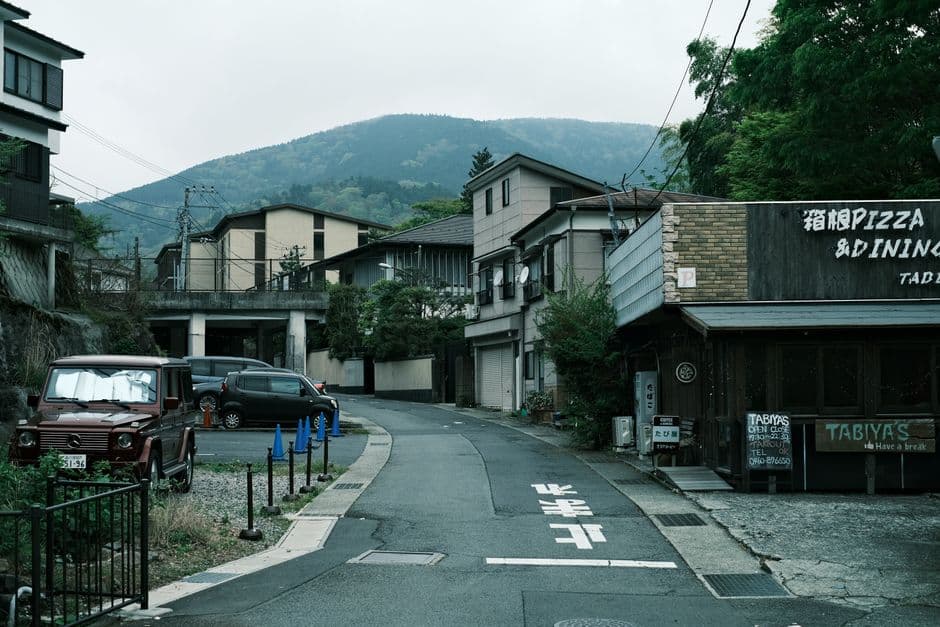
The single biggest shock is not the side of the road: it is the width of everything. Japanese urban streets average 5.5 metres kerb to kerb. Your brain, wired for driving on the right, will instinctively hug the left edge of your lane, which in Japan means drifting toward the gutter. Knowing this in advance is half the battle.
At the Rental Counter
You need an International Driving Permit (IDP) based on the 1949 Geneva Convention, not the 1968 Vienna Convention version. Japan does not recognise the Vienna-format permit. Bring both the IDP and your original national licence; staff check both together. EU, UK, Swiss, and Monaco licences enjoy a separate bilateral treaty and do not need an IDP at all: just show the original.
Most major agencies (Toyota Rent a Car, Nippon Rent-A-Car, Times Car) have English-speaking counters at airports. Collect your ETC card at the counter if you plan to use expressways: the in-car ETC transponder is mandatory in dedicated toll lanes and saves significant time over cash booths.
Rental Counter Reality Check
Most rentals in Japan are kei cars (660cc). Book a compact (1300cc+) if you will use expressways: kei cars struggle above 100 km/h and highway wind buffeting is severe.
Leaving the Car Park: The First Five Minutes
Pull out of the car park and your instinct will want to swing wide to the right. Resist it. Keep the steering wheel on the right side of the car close to the centreline: that mental anchor corrects 80 pct of new-to-Japan steering errors. Repeat it like a mantra until it becomes automatic.
Indicators and wipers are reversed compared to North American and continental European cars. In Japan (and the UK, Australia), the indicator stalk is on the right of the column and the wiper stalk is on the left. Every left-hand-traffic first-timer triggers their wipers when they mean to signal. It happens. Laugh, correct, move on.
Speed limits in Japan are strictly enforced by fixed cameras and random patrol stops:
- Urban areas: 30–40 km/h
- National routes (kokudo): 60 km/h
- Expressways (kosoku): 100 km/h (some upgraded sections 120 km/h)
The First Intersection
Turning left is easy: same geometry as a right turn in right-hand countries. Turning right is the hard one. You must cross oncoming traffic. Slow down early, position in the centre of your lane, and wait for a clean gap. Do not follow the car ahead blindly: Japanese drivers are patient; tourists are not.
Look right first when stepping off a kerb or pulling out of a junction. Your pedestrian instinct (look left first) is backwards here. Passengers opening doors instinctively look right in right-hand-traffic countries: brief them before they exit.
Road Signage
Japan uses international pictogram signs for most warnings and regulations, so you will recognise stop (inverted triangle, red border), no-entry (red circle with horizontal white bar), and speed-limit circles. Destination signs on national routes are bilingual (Japanese kanji + romaji) at major junctions. On smaller prefectural roads, only kanji may appear: download an offline map (Google Maps, Maps.me) before you leave the city.
The One Rule That Catches Everyone
At a pedestrian crossing without traffic lights, you are legally required to stop for any pedestrian who is waiting at the kerb, not just those already crossing. This is enforced, and Japanese pedestrians genuinely expect you to stop. It is one of the clearest differences from driving culture in many other countries.
After that first hour, left-side driving becomes muscle memory faster than most people expect. The narrowness stays challenging longer than the side of the road does.
 Driving
 Driving