 Cultural Taboos Non Verbal Body Language
Korean gestures decoded: what's polite vs offensive, from two-handed giving to the OK sign. Essential nonverbal rules before you land.
South Korea runs on a dense layer of nonverbal code that most visitors never receive a briefing on. Get it wrong and you will not be corrected, Koreans rarely call out a foreigner's misstep to their face. You will simply be quietly judged, and doors will close.
The Two-Handed Rule: Your Most Important Takeaway
In Korea, offering or receiving anything with two hands signals respect. Business cards, gifts, money, food, drinks, all pass more gracefully when both hands are involved. The minimum acceptable shortcut is to use your right hand while your left lightly supports your right forearm or wrist. Handing something over with a single dangling hand reads as careless or even dismissive.
This applies in restaurants (handing the server your card), at convenience stores (taking change), and especially in any professional context. Younger Koreans in casual settings are more relaxed about this, but when in doubt, use both.
Bowing: Depth Is a Statement
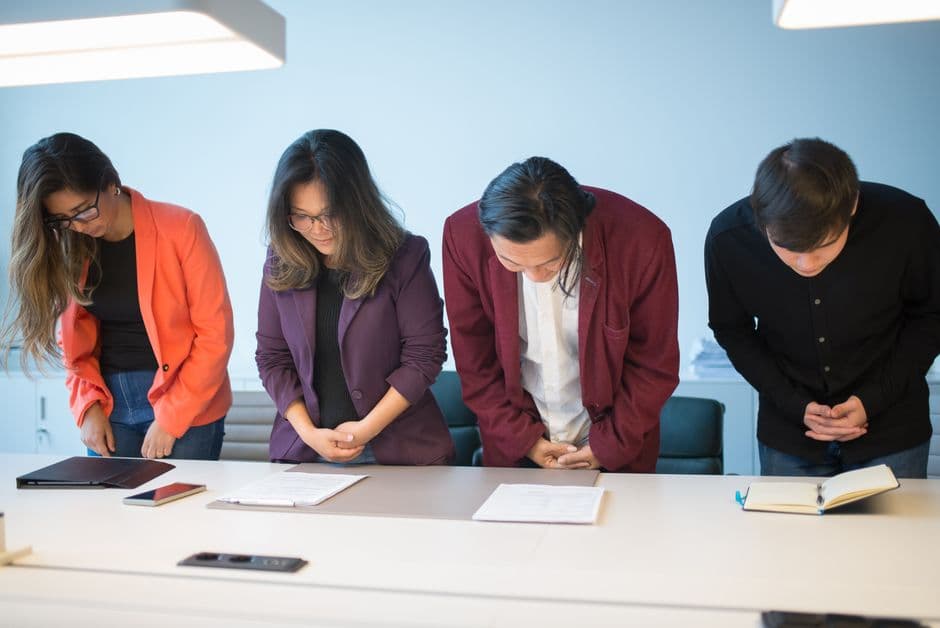
Koreans bow rather than shake hands in many situations, though handshakes have become common in business. Key rules:
- 15 degrees, casual greeting between peers or strangers.
- 30 degrees, meeting someone senior, thanking a shopkeeper, entering a temple.
- 45 degrees or deeper, formal apology or deep gratitude.
Initiating a bow first when meeting someone older is expected. Failing to return a bow at roughly the same depth reads as arrogance. If someone extends a hand for a shake, a slight bow while shaking is the polished move.
Gestures That Mean Something Different Here
Several gestures tourists use instinctively carry different or offensive meanings in Korea:
- The "OK" circle (thumb + index finger), in Korea, particularly among older generations, this signals "money" or can imply something is worth nothing. Context matters, but skip it in professional or formal settings.
- Beckoning with one finger, calling someone over with a single upright finger is considered rude. Use a downward wave with all four fingers (palm facing down) to beckon someone.
- Pointing with the index finger, points at objects are fine, but pointing directly at a person is blunt and aggressive. Use an open hand instead.
- Thumbs up, generally understood as positive, imported from Western media. Safe to use.
- Crossing arms while receiving something, crossing your arms forms an "X" shape, which signals refusal or negation. Never receive a gift or payment with arms crossed.
- Give and receive with two hands, especially to elders.
- A slight bow is a polite greeting and thank-you.
- Writing someone's name in red ink (linked to death).
Eye Contact and Personal Space
Direct, sustained eye contact with someone senior or in authority is uncomfortable in Korean culture. Brief eye contact shows engagement; staring holds challenge or confrontation. In contrast, among peers and friends, eye contact during conversation is normal and expected.
Personal space bubbles are smaller in dense urban Korea. In Seoul's Sinchon or Hongdae districts on a Friday night, physical contact in crowds is not considered an intrusion. That said, touching a stranger's shoulders or back unprompted remains inappropriate, reserve physical contact for genuine friendships.
Showing Respect to Elders: The Unspoken Checklist
Confucian hierarchy shapes Korean nonverbal behavior more than any other single factor. When interacting with someone visibly older:
- Do not sit until invited to, especially at formal dinners.
- Do not pour your own drink, pour for others first, then wait for someone to fill yours.
- Do not begin eating before the eldest person at the table lifts their chopsticks.
- Turn your head slightly away when drinking alcohol in front of an elder, a sign of deference.
Quick save at the dinner table
If you are unsure of the hierarchy at a Korean meal, mirror what the person next to you does. Koreans understand that foreigners are learning and a genuine effort to follow the cues is almost always appreciated.
What Koreans Will Never Tell You
Koreans are conflict-avoidant in public. If you commit a nonverbal offense, expect a tight smile or a subject change, not a correction. The best feedback loop is to watch how locals interact with each other and calibrate accordingly. A week of observation will teach you more than a list ever can.
Getting these gestures right costs nothing and signals that you came prepared. In a country where small signs of respect carry outsized social weight, that is worth more than you might expect.
 Cultural