
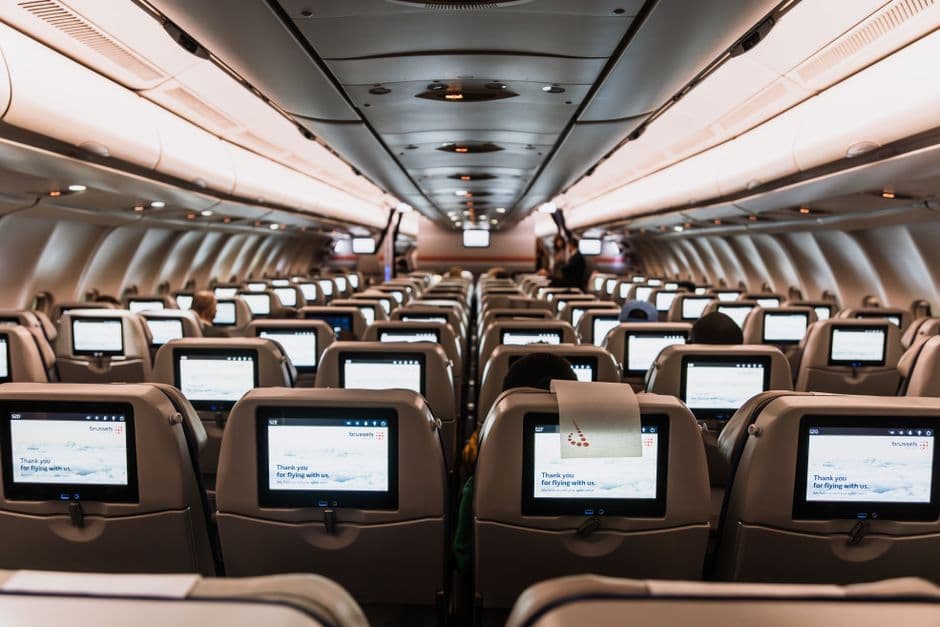
Jet lag lasts 1–2 days per time zone crossed. Here's the exact day-by-day recovery timeline and what actually speeds it up.
The rule of thumb: one day of recovery per time zone crossed. Cross five zones (New York to London) and you can expect roughly five days before your body fully resets — though the direction you travel matters as much as the distance.
New York → London
Pre-trip sleep shift
- Eastward is harder: your day is shortened.
- A few days before, sleep and wake about 1h earlier each day.
- On arrival, seek bright morning light and avoid late-evening light.
- Short nap before 3 p.m. only; get outside on arrival day.
Why Jet Lag Happens
Your circadian clock is anchored to your home light-dark cycle. Cross multiple time zones and your suprachiasmatic nucleus (the master pacemaker in your hypothalamus) keeps firing cortisol, melatonin, and core body temperature signals on home time. Cabin pressure set to an 8,000 ft equivalent — mandated by FAA regulation 14 CFR Part 25.841 — also dehydrates you faster, compounding fatigue.
Eastward travel is harder than westbound. Advancing your clock (going east) fights your circadian system's natural drift; delaying it (going west) works with it. Studies in the Journal of Sleep Research show eastward recovery takes roughly 1.5 days per zone versus about 1 day per zone westbound.
Day-by-Day Recovery Timeline: New York to London (5 zones east)
Day 1 — Arrival day
Your body thinks it is 5 hours earlier than local time. Expect peak alertness around 3–4 PM London time (10–11 AM New York time), then an energy crash in early evening. Do not nap more than 20 minutes. Power naps (NASA-validated at 26 minutes) preserve night-sleep pressure without locking you into the wrong cycle.
Day 2 — The trough
Cortisol peaks on New York time, so you wake at 4–5 AM London time feeling wired, then crash by mid-morning. Cognitive performance is measurably impaired — reaction times on validated tests (Psychomotor Vigilance Task) drop by 20–30 pct in this window. Avoid critical decisions. Light exposure between 7–9 AM London time is your single most powerful reset tool.
Day 3 — Partial adaptation
Most travelers report the worst subjective symptoms here: GI disruption, mood dips, afternoon brain fog. Your melatonin secretion is shifting, but core body temperature rhythm lags by up to 48 hours behind your sleep schedule. A 0.5 mg dose of fast-release melatonin (not the 5 mg "knockout" dose) taken at 10 PM local time nudges the clock without grogginess.
Day 4 — Inflection point
Sleep architecture begins normalizing. Deep slow-wave sleep (N3) rebounds after being suppressed in days 1–3. Most travelers sleep through the night for the first time. Morning energy is close to baseline.
Day 5 — Functional recovery
Around 80–90 pct of travelers feel fully functional by day 5. Residual symptoms (mild fatigue, slight sleep fragmentation) may persist in older travelers or those who arrived severely sleep-deprived.
Day 6–7 — Full reset
Complete circadian alignment for a standard 5-zone eastward crossing. Frequent flyers with consistent sleep hygiene often land here by day 5; irregular sleepers or those over 60 may need the full seven days.
What Actually Accelerates Recovery
- Strategic light exposure: Bright light (10,000 lux, e.g., Verilux HappyLight) in the morning on days 1–3 suppresses residual melatonin and pulls your clock forward.
- Melatonin timing over dosage: 0.5–1 mg at destination bedtime (not 5–10 mg) is supported by a 2022 Cochrane review (CD001520). Higher doses cause next-day sedation.
- Pre-flight shifting: Starting 3 days early, move bedtime 1 hour later (westbound) or earlier (eastbound) per night. Effective for crossings of 6 or more zones.
- Hydration: Drink 250 ml of water per hour of flight. Cabin humidity runs at 10–20 pct (drier than the Sahara), accelerating dehydration that worsens fatigue.
- Avoid alcohol and antihistamines on the plane: Both suppress REM sleep, extending recovery by 1–2 days.
The 2-Day Rule
If your trip is 2 days or shorter, do not try to adjust at all — stay on home time, schedule meetings around your peak hours, and recover when you land back home.
When Jet Lag Lasts Longer Than Expected
Recovery beyond 10 days points to something other than simple jet lag. Shift work disorder, underlying sleep apnea (which worsens dramatically at altitude), or severe sleep deprivation before departure can all masquerade as prolonged jet lag. Consult a sleep specialist if symptoms persist past the 1-day-per-zone window plus a 3-day buffer.
Business travelers on ultra-long hauls (New York–Singapore, 17+ hours, 13 zones) should budget 10–14 days for full adaptation — or remain on home time if the stay is under 4 days.
The Bottom Line
Jet lag recovery follows a predictable curve: roughly 1–1.5 days per time zone crossed, longer going east. The five levers that move the timeline are light, melatonin timing, pre-flight shifting, hydration, and sleep quality on the plane. Everything else — special diets, oxygen bars, IV drips — lacks the clinical evidence to justify the cost.

 Flights
 Flights