 Visas Entry
Entering South Korea visa-free? Know exactly who qualifies, the 90-day cap rules, and when you need a C-3 tourist visa instead.
Citizens of 67 countries can enter South Korea without a visa for stays up to 90 days, under bilateral visa waiver agreements managed by the Korean Ministry of Foreign Affairs. If your passport is not on that list, or if you plan to stay longer, you need a C-3 Short-Term Visit visa before you board.
Who Qualifies for the 90-Day Visa Waiver
The waiver list includes the entire European Union, the United States, Canada, Australia, New Zealand, Japan, and most of Southeast Asia. The full roster is published on the Hi Korea e-Government portal.
Key conditions that frequently trip people up:
- Passport only, not residency. A US green card holder with a non-waiver passport does not qualify. Your passport nationality is what matters.
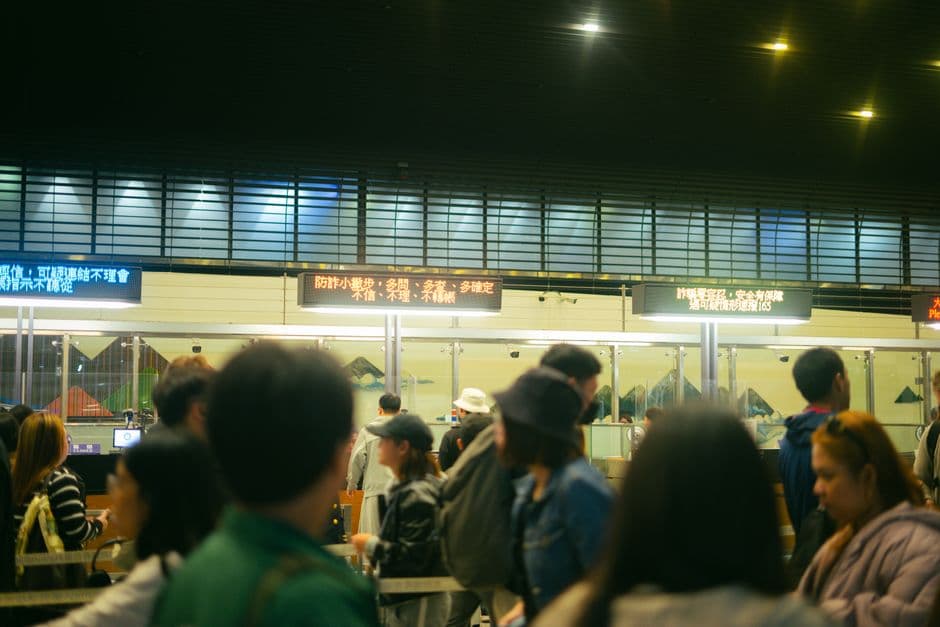
- Onward ticket required at entry. Immigration officers at Incheon (ICN) and Gimpo (GMP) routinely ask for proof of departure. Book your outbound flight before you land.
- The 90 days is a per-entry cap, not a rolling 180-day window. Unlike the Schengen zone, South Korea does not average your time across a six-month period. You get 90 days from the stamp date.
- Visa-free does not mean unconditional entry. Officers can deny entry if they suspect you are working without a work visa, have a history of overstays, or cannot show sufficient funds.
- Visa-free stay limit
- 90 days
- Overstay fine
- 500,000 KRW per day (approx)
- Nearest Korean consulate (France)
- Seoul, Korean Consulate General Paris
- Entry document
- Valid passport + onward ticket
- Currency
- Korean Won (KRW)
The C-3 Short-Term Visit Visa: When You Need It
If your nationality is not on the waiver list, or you need more than 90 days, apply for a C-3 visa at your nearest Korean embassy or consulate before departure. There is no visa-on-arrival option for South Korea.
C-3 specifications:
- Duration: Typically issued as a single-entry 90-day or multiple-entry 90-day-per-visit visa depending on your nationality and the consulate's discretion.
- Fee: Approximately 60 USD for single entry, 90 USD for multiple entry (fees vary by consulate and reciprocity agreements).
- Processing time: 3 to 5 business days at most consulates; allow 10 days during peak periods (March–May, September–October).
- Required documents: Completed application form (available on the consulate website), valid passport (6+ months remaining), passport photo, round-trip itinerary, proof of accommodation, and bank statements showing sufficient funds (typically 1,000,000 KRW per month of stay as a rough benchmark).
Apply through the official Korean Visa Application Center (KVAC) in countries where one operates (the UK, France, and several others), or directly at the consulate.
Can You Extend a Waiver Stay Inside Korea?
In rare circumstances, yes. The Korea Immigration Service (KIS) allows visa-waiver visitors to apply for a single 90-day extension at a local immigration office, but approval is discretionary and not guaranteed. You must apply before your current permission expires. The fee is 60,000 KRW. Bring your passport, a completed application (Form 34), and supporting documents (accommodation proof, financial statements, a letter explaining the need to extend).
Visa runs do not reset the clock automatically. Officers at land borders with China and at ferry terminals to Japan are trained to flag frequent short exits followed by re-entry. Multiple consecutive 90-day stints with no clear income source can trigger a refusal.
Practical Entry Tips
- K-ETA for waiver-eligible nationals: As of 2024, South Korea waived the K-ETA (Korea Electronic Travel Authorization) requirement for most nationalities through the end of 2025. Check the latest status at K-ETA official site before travel, as the policy has changed multiple times.
- APIS (Advance Passenger Information): Your airline collects this at check-in. Ensure your passport details match your ticket exactly.
- Entry at Incheon vs. Busan: Processing times at Gimhae International Airport (PUS) serving Busan are generally faster than Incheon during peak summer and cherry-blossom season.
Overstaying is costly
Overstaying your authorized period in South Korea results in fines of roughly 500,000 KRW per day, a potential deportation order, and a re-entry ban of 1 to 5 years. The Korean Immigration Service cross-references hotel registrations and credit card activity, do not rely on going undetected.
The bottom line: if your passport is on the waiver list and your stay is 90 days or under, the process is frictionless. If either condition is not met, apply for the C-3 well ahead of your travel date and carry your documentation to the immigration counter.