 Seasonal Clothing Dress Codes
Taiwan has three distinct wet spells, not one. Know the Meiyu window, typhoon peak, and northeast monsoon — and pack accordingly.
Taiwan does not have a single rainy season — it has three overlapping wet spells, each with a different character, and confusing them leads to soggy luggage and cancelled plans. Here is exactly what each one involves.
- Plum rain (Meiyu)
- May-June (stationary fronts)
- Northeast monsoon
- Oct-Feb (north and east coast)
- Typhoon season
- May-November, peak Jul-Sep
- Annual rainfall (Taipei)
- ~2,500 mm (98 in)
- Average humidity Jan
- 76 pct
- Average humidity Aug
- 84 pct (peak)
The Meiyu: Taiwan's Classic "Rainy Season"
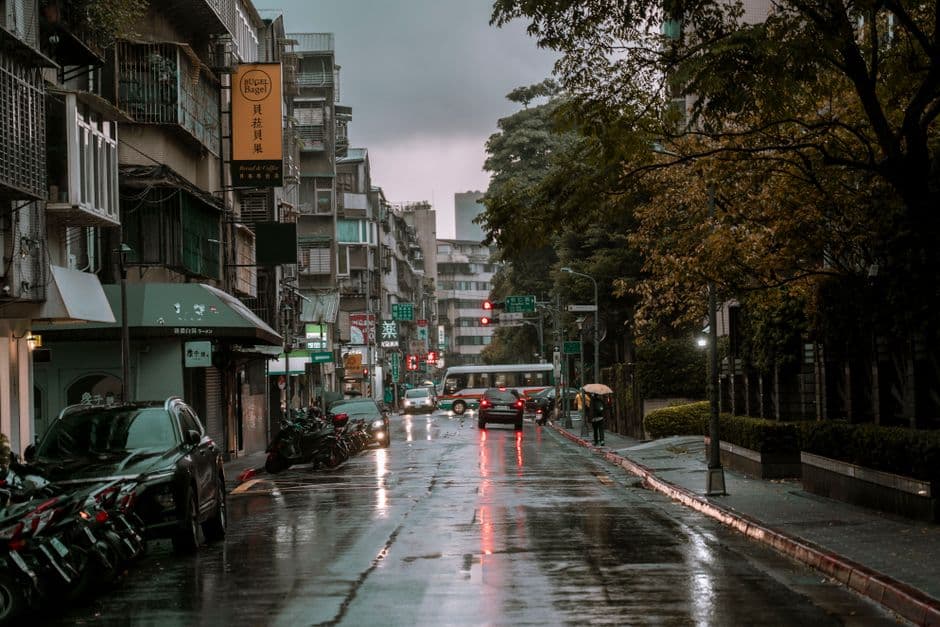
The Meiyu (梅雨, "plum rain") is what most people mean when they ask about the rainy season in Taiwan. It runs from mid-May through June, typically six to eight weeks, and is caused by a stationary front — the Meiyu front — where cold, dry continental air collides with warm, moist Pacific air. The result is not tropical downpours but rather persistent grey skies, low ceilings, and drizzle that can stretch for days without a break.
Taipei and the north bear the brunt of it first. By late May the front slides south, and Tainan and Kaohsiung see their share through June. Flooding in low-lying urban areas, especially around Keelung and the Danshui River basin, is a real risk during heavy Meiyu events. The 2025 season was forecast to be slightly drier than average by Taiwan's Central Weather Administration, but that is the exception, not the rule.
What it feels like: Humidity sits between 80 and 85 pct throughout this window. Temperatures are in the mid-20s°C (mid-70s°F), which sounds mild, but the combination of heat and saturation makes it feel suffocating indoors without air conditioning. Clothes take two days to dry on a rack.
Typhoon Season: Heavier, Shorter, More Violent
Typhoon season officially spans May to November, but the real danger window is July through September. On average, 1.9 typhoons per year make direct landfall on Taiwan. When one does, the Central Weather Administration issues sea warnings first, then land warnings — at that point, schools and government offices close under a standardized protocol known as a typhoon day (颱風假).
Typhoons bring the heaviest rainfall Taiwan sees all year. A single storm can dump 500 mm (20 inches) of rain on mountain areas within 24 hours. The east coast — Hualien, Taitung — faces storms head-on as they move in from the Pacific. The west coast (Taichung, Tainan) is partially sheltered by the Central Mountain Range, but flooding still reaches urban streets.
For travellers, the practical exposure is disrupted flights (Taoyuan International Airport suspends operations during land warnings), road closures on the Suhua Highway (蘇花公路), and ferry cancellations to the Penghu, Green Island, and Orchid Island. Build one or two buffer days around island-hopping legs if you travel in August.
The Northeast Monsoon: Winter Rain for the North
Less discussed but equally relevant: the northeast monsoon (東北季風) arrives in October and dominates through February. It funnels cold, moist air down the eastern coast of Asia, hitting Taipei, Keelung, and Yilan hardest. Keelung earns the informal title of Taiwan's rainiest city during this window — some years it rains more than 200 days annually.
The south flips completely. Kaohsiung and Kenting in January are sunny and warm (around 22°C / 72°F), making southern Taiwan genuinely pleasant while the north drowns. Humidity in Taipei stays around 76–78 pct even in January, but the temperature drop to 12–15°C (54–59°F) makes it feel raw rather than tropical.
Pack for three climates in one bag
A packable rain jacket (not an umbrella alone — Meiyu wind makes umbrellas useless) covers the wet season. Add quick-dry fabrics for the humidity: cotton stays wet, synthetic blends dry overnight. In typhoon season, check the Central Weather Administration app (cwb.gov.tw) daily from July onward. For the northeast monsoon, layer rather than bring a heavy coat — Taipei winter rarely drops below 10°C (50°F).
The Dry Spell Worth Planning Around
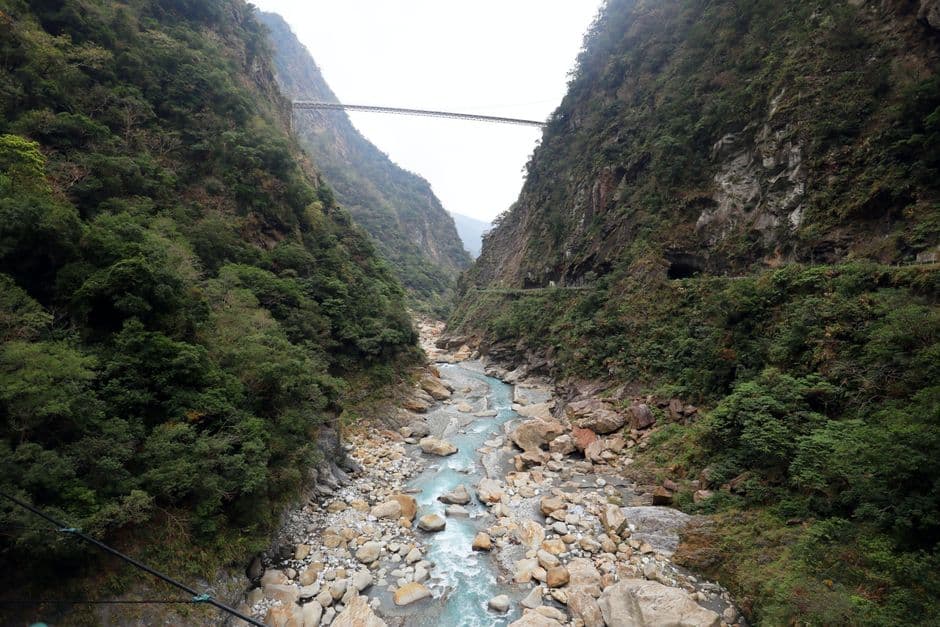
October and November are the sweet spot: the northeast monsoon has not yet fully established, typhoon season is winding down, humidity drops toward 75 pct, and temperatures in the low-to-mid 20s°C (low 70s°F) are ideal for hiking the Taroko Gorge trail or cycling the East Rift Valley. March and April offer a similar window before the Meiyu builds — drier than summer, cool enough for the mountains, warm enough for beaches in the south.
Avoid late May through September unless your schedule is fixed. If it is, budget for weather-related cancellations and keep your electronics in dry bags — a lesson the Meiyu teaches quickly.
 Emergency