 Food Culture Local Dining Etiquette
Master Taiwan night market dining: how to queue, pay, and order at stalls in Shilin, Raohe, and Ningxia, practical tips before you arrive.
Cash is still king at most Taiwan night market stalls, and arriving without New Taiwan Dollar in your pocket is the single most common mistake first-timers make.
The Cash Reality in 2026
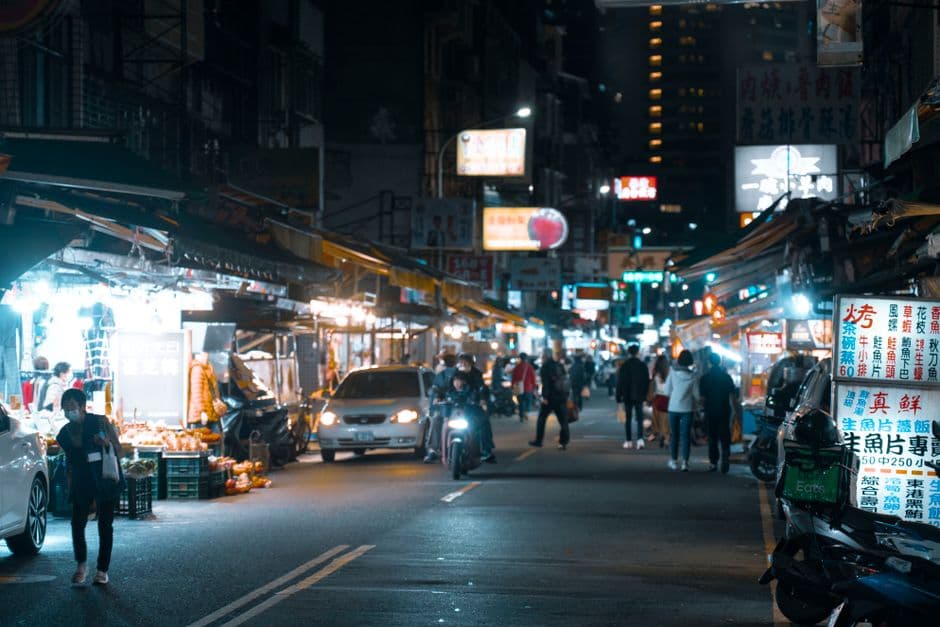
Major night markets, Shilin (士林夜市), Raohe (饒河夜市), Ningxia (寧夏夜市), Fengjia (逢甲夜市) in Taichung, are dominated by individual family-run stalls. Roughly 70–80 pct of vendors remain cash-only. A handful of larger, permanent-format operators (think the sit-down seafood section inside Shilin's underground food court) accept LINE Pay or street-scan QR codes, but you cannot rely on this. Withdraw NT$1,000–2,000 (around USD 30–60) from a 7-Eleven or FamilyMart ATM before you arrive, both chains accept foreign cards and charge a flat NT$100 fee per withdrawal.
How Ordering Actually Works
Most stalls operate on one of two models:
Point-and-pay at the counter. Walk up, point at what you want (menus almost always have photos), hold up fingers for quantity, pay immediately, then step aside and wait. The vendor calls your number or waves you over, no ticket system, just spatial memory on their part. This is the norm at oyster vermicelli (蚵仔麵線) counters, scallion pancake (蔥抓餅) grills, and bubble tea shops.
Order slips. Some larger stalls, particularly grilled skewer (烤肉串) vendors and the famous Ay-Chung Flour-Rice Noodle stall on Ximending's Emei Street, hand you a paper slip and a pen. Tick the items, return the slip to the counter, pay, and collect when called. Circle the quantity next to each item; the slip is your receipt.
Queuing and Seat Culture
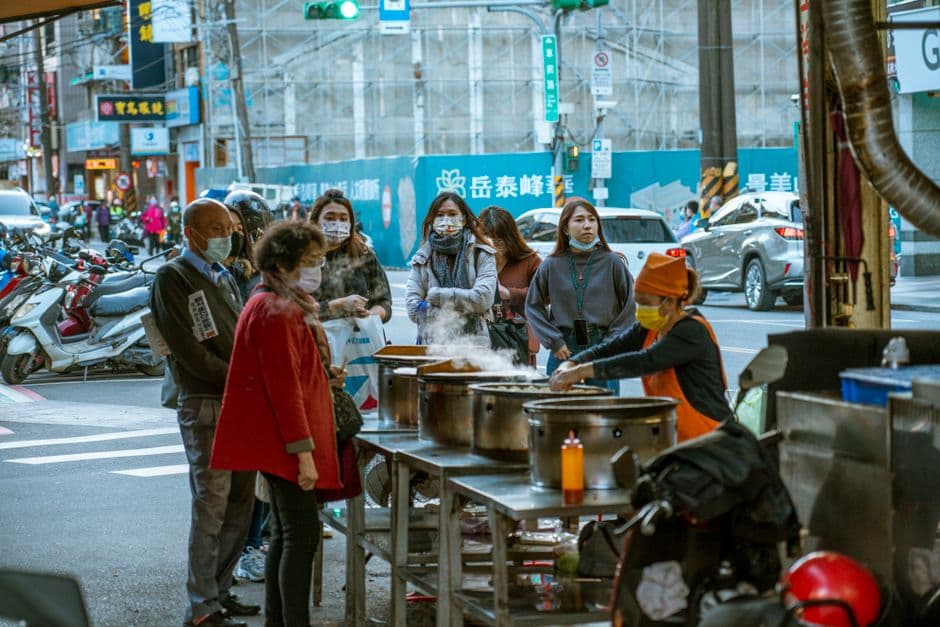
There are no formal queues at most stalls, it is a polite crowd press. Stand near the counter, make eye contact with the vendor, and hold up fingers when they glance your way. Cutting in front is genuinely rare and frowned upon; vendors notice regulars and impatient tourists alike.
Seating is communal and fluid. Plastic stools and folding tables belong to no single stall. Sit anywhere that is empty. If a vendor's customers have clearly taken over a cluster of tables, buy something from that vendor before sitting, it is an unspoken rule that keeps the ecosystem working. Nobody will eject you, but locals do notice.
Do not linger at a table with an empty tray during peak hours (8–10 pm on weekends). Clear your own dishes to the nearest rack or bin; most stalls have a self-return station. Leaving rubbish on the table is considered impolite.
Payment Tips at the Stall
- Exact change helps but is not expected. Vendors keep floats. Handing over a NT$1,000 note for a NT$50 bowl is fine, just be aware it can slow things at peak hours.
- LINE Pay / Street-scan QR codes are spreading among younger operators. Look for a QR code placard on the counter. If you see one, you can ask "可以 LINE Pay 嗎?" (kě yǐ LINE Pay ma?), "Can I pay with LINE Pay?"
- EasyCard (悠遊卡) works at some permanent food-court kiosks inside Shilin and at certain chain bubble tea stalls (50 Lan, Gong Cha), but not at independent street vendors.
- Never hand money with one hand while on a phone call. It reads as dismissive. Put the phone down, hand over the cash with both hands or your right hand, say xièxiè (謝謝), and you will get a warmer response.
Allergy and Dietary Navigation
Vegetarian options exist, look for the red 素 (sù) character on signs, indicating a vegetarian-certified stall. Peanuts and shellfish are in nearly every sauce; cross-contamination is standard. If an allergy is serious, carry a printed allergy card in Traditional Chinese (not Simplified, Taiwan uses Traditional script). The word for peanut is 花生 (huāshēng); shellfish is 貝類 (bèilèi).
Night markets close by midnight Sunday through Thursday and push past 1 am on Fridays and Saturdays. Arrive by 7 pm if you want first pick of everything; the best stalls sell out of specific items, Ningxia's braised pork rice (滷肉飯) vendors often run dry of braised egg by 9 pm on weekends.