 Wildlife Interactions Strays Animal Tourism
Nara's 1,300 free-roaming deer are charming, and surprisingly assertive. Here's the feeding etiquette and safety rules every visitor needs.
Nara's sika deer do not wait politely. Within thirty seconds of entering the park near Todai-ji, you will understand this. A deer that spots crackers in your hand will nudge you, headbutt your bag, and if you hesitate, grip your sleeve in its teeth. They are not dangerous in the way a bear is dangerous, but they are large animals with sharp hooves, genuine mood swings, and no fear of tourists.
- Deer population
- ~1300 (Nara Park)
- Protected status
- National treasure
- Bow back?
- They bow for crackers, not as a greeting
- Rut season (Oct-Nov)
- Males aggressive, extra caution
- Fawn season (May-Jun)
- Mothers protective
The Bow That Isn't a Greeting
The signature move, a deer dipping its head repeatedly, is a food solicitation behavior, not a social greeting. Deer learned it generations ago because vendors taught them that bowing triggers a cracker reward. If you bow at a deer that has no reason to expect food, it will stare at you blankly. If you bow while holding shika sembei, it will bow back enthusiastically and then headbutt you if you don't deliver fast enough.
What Shika Sembei Actually Are
Shika sembei (鹿せんべい) are flat, odorless crackers made from rice bran and wheat flour. They are specifically formulated to be digestible for sika deer and are the only food you should give them. Bundles of around ten crackers cost roughly 200 yen from licensed vendors positioned around the park: look for the yellow sash. The crackers are plain, dry, and mildly flavored; the deer love them regardless.
Buy Only Official Shika Sembei
Only feed the deer official shika sembei (deer crackers, ~200 yen per bundle from licensed vendors). Plastic bags, regular food and personal snacks cause digestive problems. Deer know when you have food: keep bags zipped and do not hold food up or wave it.
Do not give deer:
- Human snack food (chips, bread, fruit, sweets): causes digestive distress and teaches them to target tourist bags
- Plastic packaging: deer will chew and swallow it; rangers treat multiple plastic ingestion cases each year
- Nothing from your pocket: if they saw you reach in, they will try to get into the pocket themselves
How to Feed Safely
Give crackers low and directly, one at a time. Do not hold crackers above your head or wave the bundle: this triggers a crowd response and you will be surrounded within seconds. Once the crackers are gone, show your open palms, fingers spread, facing out. Deer recognize this as an "empty hands" signal and typically lose interest quickly.
Keep your bag zipped at all times. Deer have learned that rustling bags may contain food and will attempt to open them. Messenger bags with magnetic clasps are particularly vulnerable. If a deer grabs your bag or clothing, do not yell or push: step sideways and open your palms to show nothing is there.
Seasonal Risks Worth Knowing
October and November are the rut season. Male deer (bucks) grow antlers and become genuinely territorial. They will charge if they feel provoked or cornered. During rut, give bucks extra space, do not approach from behind, and stay on marked paths near large groups. Park signage is updated each autumn to flag the highest-risk zones.
May and June bring fawns. Mothers (does) are protective and will kick if they feel a fawn is threatened. Fawns are irresistible, but attempting to pet or photograph one at close range near its mother is the fastest way to get a hoof to the shin.
What the Park Does Not Tell You Upfront
Deer will charge small children who run. Running triggers a chase instinct. If you are visiting with children under ten, brief them beforehand: slow movements, no running, crackers offered low. Park rangers are present and will intervene, but the charge happens faster than an adult can react.
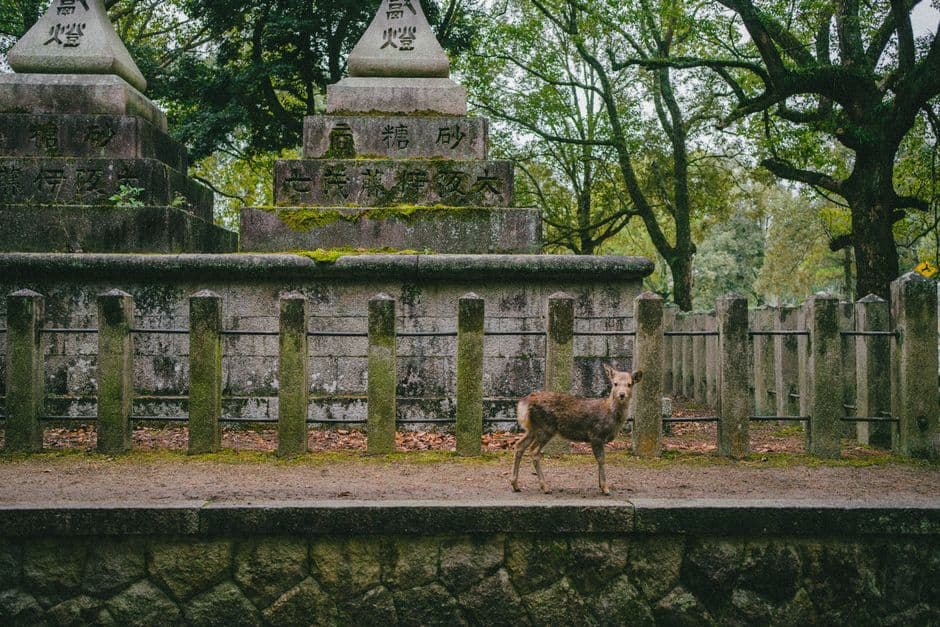
There are no fences. The deer roam freely through the surrounding streets, the Kasuga Taisha shrine approach, and even into nearby shopping lanes. Outside the park boundaries, do not feed deer: it trains them to approach traffic and creates road hazards. Accidents involving deer on Route 369 have increased as the animals learn to associate cars with tourists carrying food.
The deer of Nara are a genuine wonder, but they have been shaped by a century of tourist interaction into something quite specific: assertive, clever animals that have learned to extract food from humans with precision. Treat them with respect, follow the cracker rules, and they are a highlight of any Japan trip.
 Wildlife