 Seasonal Clothing Dress Codes
Confused by Japanese clothing sizes? Learn exact conversion charts for women and men, and find out what 'free size' really means before you shop.
Japan's clothing sizes bear almost no resemblance to European or American ones, and the labeling system differs by garment type, gender, and brand. Getting this wrong means buying a jacket you cannot zip. Getting it right means walking out of Uniqlo, GU, or a vintage shop in Shimokitazawa with exactly what you wanted.
- Japan S
- EU XS-S
- Japan M
- EU S-M
- Japan L
- EU M-L
- "Free size"
- Usually fits up to EU 38-40
- Uniqlo sizing
- Runs larger than average Japan
The Two Systems You Will Encounter
Japanese clothing uses two parallel systems depending on the item:
Letter sizing (S / M / L / XL / XXL): used for T-shirts, knitwear, hoodies, and most casual tops. These letters run one to two sizes smaller than their European equivalents. A Japanese M sits comfortably on a European S frame; a Japanese L covers a European M or a slim European L.
Numerical sizing: used for trousers, skirts, tailored jackets, and dress shirts. Women's bottoms are typically labeled 5, 7, 9, 11, 13 (roughly EU 34 through 42). Men's dress shirts use collar circumference in centimetres (37, 38, 39, 40, 41). Men's trousers use waist size in centimetres, which is one of the rare cases where the Japanese label is actually self-explanatory.
Shoe Sizes: The Easiest Conversion
Shoes are measured in centimetres of foot length (24.0, 24.5, 25.0) which makes conversion unusually precise. Measure your foot on paper and you have your Japanese shoe size immediately.
Approximate; brands vary, so try on when you can.
One practical note: Japanese shoes run narrow by Western standards. Brands like ABC-Mart carry wider fittings in some styles, but if your foot is wide, try on before buying. Many stores in tourist-heavy areas like Harajuku or Shinjuku's Takashimaya Times Square have staff accustomed to helping foreign visitors find the right width.
What "Free Size" Actually Means
"Free size" (フリーサイズ, furii saizu) does not mean one size fits all. It means the item was designed without size differentiation for a specific, narrow target body shape. In practice, free size garments are cut for a Japanese S-M frame: roughly bust 82-88 cm, hips up to 90 cm, height around 155-165 cm.
If you are above EU 38-40 in tops or wear a European L or above, free size items will commonly be too tight across the shoulders, too short in the torso, and constrictive around the bust. This applies especially to:
- Flowy blouses and cotton tunics sold in 109 Shibuya-style boutiques
- Knit cardigans in concept stores in Daikanyama
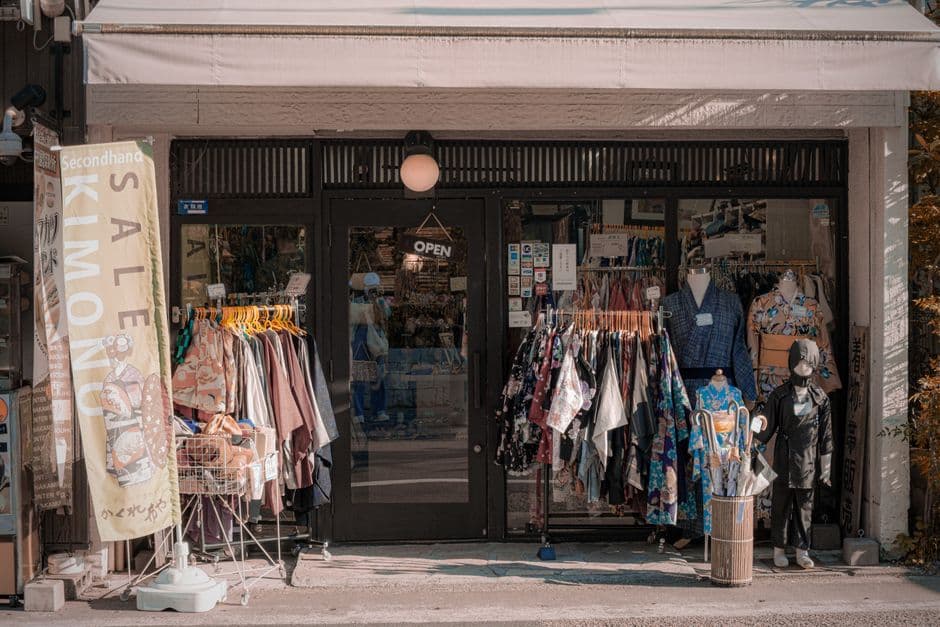
- Vintage items labeled "one size" in Shimokitazawa
When a garment carries only a free size label and no measurements, ask a staff member for the actual dimensions. Most shops keep a tape measure and will measure the chest and length on the hanger without hesitation.
Brands That Size Differently
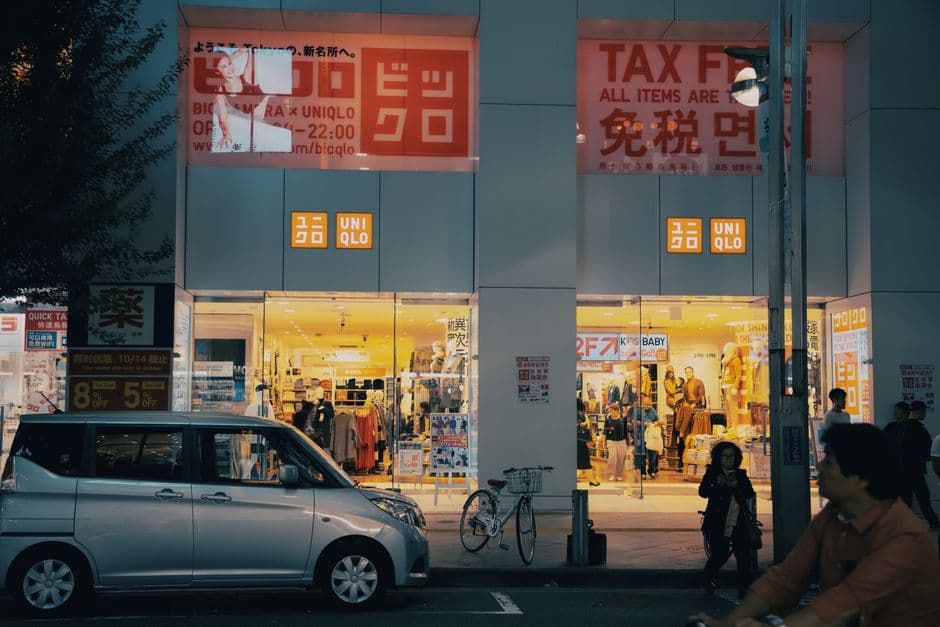
Uniqlo sizes larger than the Japanese average. Their M is closer to what a Japanese brand would call L. This makes Uniqlo a reliable option if you normally find Japanese M too snug. Their website lists exact centimetre measurements per size on every product page: use those, not the letter.
GU (Uniqlo's budget sister brand) follows the same generous sizing convention.
Beams, United Arrows, Ships: these multi-brand select shops stock Japanese sizing but also carry imported labels in their original sizes. Check the tag carefully: a blazer on the same rack might be labeled 38 (French) or M (Japanese), which are not the same garment.
Fast Retailing outlets and department stores (Isetan, Mitsukoshi) display sizing guides at the entrance to each floor. Use them.
Practical Tips Before You Shop
- Measure yourself in centimetres before arriving: bust, waist, hips, inseam, and foot length. Japanese dressing rooms are small but abundant: use them every time.
- Jeans run short in the inseam. A Japanese 30-inch inseam is genuinely 30 inches, which suits a height of around 165 cm. If you are taller, look for "tall" sections in Uniqlo or the imported denim section in Isetan.
- Returns are uncommon. Most smaller boutiques in Harajuku and Shimokitazawa do not accept returns on sized items once purchased. Exchange only, sometimes. Try before you buy.
- Online shopping from Japan (Zozotown, Rakuten Fashion) always lists centimetre measurements alongside the letter size. Use those columns, not the letter.
Japanese shopping is genuinely pleasurable once the sizing logic clicks. The staff are attentive, the product quality is high, and the range is enormous. Knowing your measurements in centimetres is the single most useful preparation you can do before walking into any Japanese clothing store.