 Regional Breakdown Geography
Shinkansen vs bus vs plane: what actually makes sense for the Tokyo-Osaka corridor, and the city-level differences that shape your whole trip.
The fastest train between Tokyo and Osaka leaves every ten minutes. That single fact tells you something important: this is one of the world's most heavily traveled intercity corridors, and getting between the two cities is genuinely easy. What trips up most visitors isn't the journey itself: it's arriving in Osaka expecting a smaller Tokyo and finding something almost entirely different.
- Shinkansen travel time
- 2h 30m (Nozomi)
- Fare (unreserved)
- ~14,000 yen
- JR Pass covers
- Yes (Hikari
- Kodama only)
- Night bus option
- ~3,500 yen
- Flight
- 65 min but airport time makes it slower
The Journey: What Actually Makes Sense
Shinkansen is the default choice for almost every traveler, and the math is straightforward. The Nozomi (the fastest service, not covered by the JR Pass) takes 2 hours 30 minutes from Shin-Osaka to Tokyo Station. The Hikari, which the JR Pass does cover, adds about 20–30 minutes with a few extra stops. Book unreserved seats (jiyuseki) if you're flexible; reserved seats (shiteiseki) cost the same with a pass but require a reservation at the green JR window or a ticket machine.
The highway bus (Willer Express, JR Bus Kanto) cuts the fare to roughly 3,500–5,000 yen one-way. The overnight "Dream" services leave around 23:00 and arrive by 06:30, saving a night of accommodation. If you're young, flexible, and don't mind arriving a little stiff, the night bus is a legitimate budget move, not just a compromise.
Flying looks attractive on paper: Itami Airport (ITM) is 65 minutes from Haneda (HND). In practice, when you factor in check-in, security, the monorail from Itami to Umeda, and the Yamanote Line from Haneda to central Tokyo, you've spent four hours on a 65-minute flight. Only consider it if you have miles burning a hole in your account or you're continuing to another domestic destination.
Why Osaka Disorients Tokyo-First Travelers
The two cities share bullet trains and konbini, but they operate on genuinely different social frequencies.
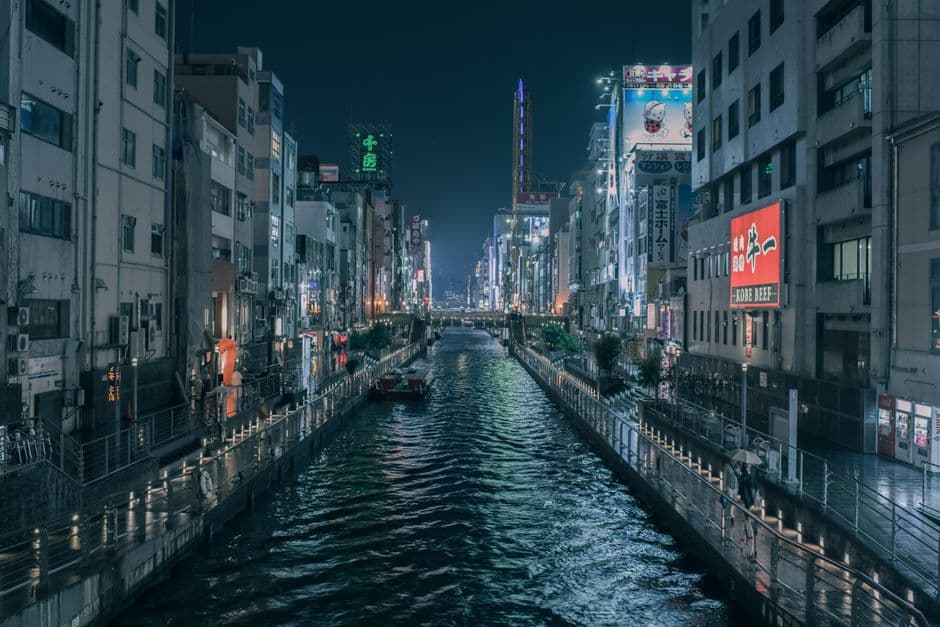
Spatial logic is inverted. Tokyo organizes itself around neighborhoods: Shibuya, Shinjuku, Akihabara each feel like distinct towns. Osaka concentrates its energy into two dense corridors: Namba/Shinsaibashi in the south (Minami) and Umeda/Kitashinchi in the north (Kita), with relatively little in between. You don't drift between districts in Osaka; you commute between two poles.
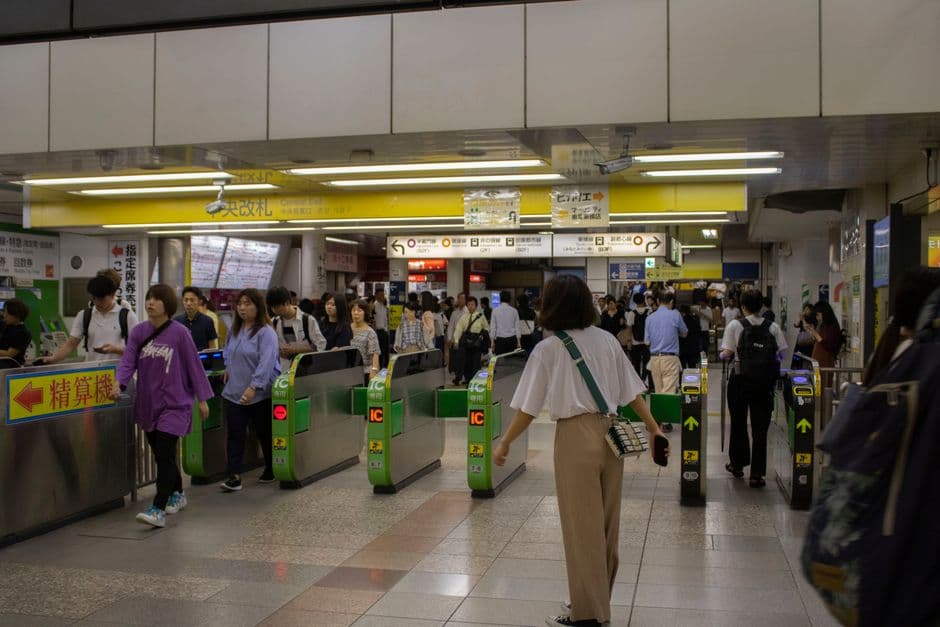
The transit network is genuinely different. Tokyo runs on JR + Tokyo Metro + Toei, and IC cards (Suica, Pasmo) cover nearly everything. Osaka runs on JR West, the Osaka Metro (formerly Osaka Municipal Subway), and the Hankyu/Hanshin private lines. Your Suica works fine here, IC interoperability is nationwide, but the line logic is new. Namba Station and Namba (Osaka Metro) are different stations, 3 minutes apart on foot. Shin-Osaka (Shinkansen) requires a subway or JR local to reach Namba or Umeda. Budget 20–25 minutes for that last leg after you step off the bullet train.
Eating culture is meaningfully different. This isn't a cliché. Osaka genuinely spends more per capita on food than any other Japanese city: a fact backed by government household expenditure surveys. The casual standing-eating culture (tachinomi, tachigu) is more embedded here. Kushikatsu bars in Shinsekai operate under strict rules: never double-dip the communal sauce, and establishments will enforce it. In Tokyo, street food culture is comparatively muted.
Practical Planning Decisions
If your itinerary runs 10 days or more and you're buying a 14-day JR Pass, the Tokyo–Osaka Hikari round trip alone (roughly 28,000 yen in savings) nearly justifies the pass cost before you factor in day trips to Kyoto, Hiroshima, or Nara.
If you're doing Tokyo only then Osaka only with no day-tripping, a point-to-point Nozomi ticket is cheaper than any pass. Buy it at the station or through the Shinkansen eTicket app (10 pct discount for advance online purchase with a foreign card).
Base yourself in Namba or Shinsaibashi for nightlife and street food access. Umeda suits business travelers and anyone flying in via Itami. Shin-Osaka is a transit hub, not a neighborhood: don't book accommodation there expecting to walk to anything interesting.
The corridor between Tokyo and Osaka isn't just a route. It's an argument for why efficient infrastructure makes a country feel smaller, and why "smaller" doesn't mean "less."