 National Holidays Seasonal Business Closures
Golden Week shuts banks, spikes hotel prices and packs every shinkansen. Here's exactly what to expect and how to plan around it.
Golden Week is Japan's most congested travel period of the year. Four public holidays fall within seven days at the end of April and start of May, triggering the single largest domestic travel surge in the country. If your trip overlaps with this window, every rule you've read about "off-peak Japan" is temporarily void.
- Showa DayApril 29
- Constitution DayMay 3
- Greenery DayMay 4
- Children's DayMay 5
The Four Days That Drive Everything
Showa Day (April 29) opens Golden Week and honours Emperor Hirohito's birthday. Constitution Day (May 3), Greenery Day (May 4), and Children's Day (May 5) follow in quick succession. Because May 3–5 land on consecutive days, Japanese law triggers a substitute holiday on May 6 whenever one of those dates falls on a Sunday, extending the run to eight days. The result is that almost every salaried worker in Japan takes the same week off simultaneously.
What Actually Closes
The picture is more nuanced than "everything shuts." Here is what to expect:
- Banks and government offices: closed on all four public holidays. ATMs at 7-Eleven, Japan Post and major convenience stores remain operational 24 hours.
- Most museums and some temples: many close on May 4 (Greenery Day) specifically, even though they stay open on the other holidays. Check individual websites: the Kyoto National Museum and Tokyo National Museum publish specific Golden Week schedules in March.
- Independent restaurants and small shops: at the owner's discretion. A ramen counter in a residential neighborhood may close for the full week. Chain restaurants and department store food halls stay open and are busier than ever.
- Post offices: closed. Parcel lockers at convenience stores still work for pickups.
What does not close: convenience stores, supermarkets, major department stores (Isetan, Takashimaya, Mitsukoshi run extended hours), train and subway networks, and most tourist attractions.
What Costs More
Golden Week Price Surge
Shinkansen seats sell out 3 months ahead. Hotel prices double or triple. Popular ryokan in Hakone and Kyoto are often booked 6+ months in advance. If your dates overlap Golden Week, book everything before you buy your flight.
The price surge is real and follows a predictable pattern:
- Shinkansen: the Tokaido line (Tokyo–Kyoto–Osaka) and Sanyo line extension to Hiroshima run at near-100% reserved-seat capacity. Unreserved carriages exist but involve standing for two-to-three-hour journeys. JR Pass holders must still reserve seats: do it the moment the 3-month booking window opens.
- Accommodation: business hotels in Tokyo that normally run ¥8,000–¥12,000 per night regularly exceed ¥25,000. A mid-range ryokan in Hakone that costs ¥25,000 per person in March can reach ¥50,000+ during Golden Week. Budget capsule hotels double as a pressure valve and book out faster than five-star properties.
- Highway tolls and car rentals: car rental inventory is essentially zero nationwide from April 27 onward unless booked months in advance. Highway rest stops (SA and PA) turn into informal campgrounds.
How to Actually Manage It
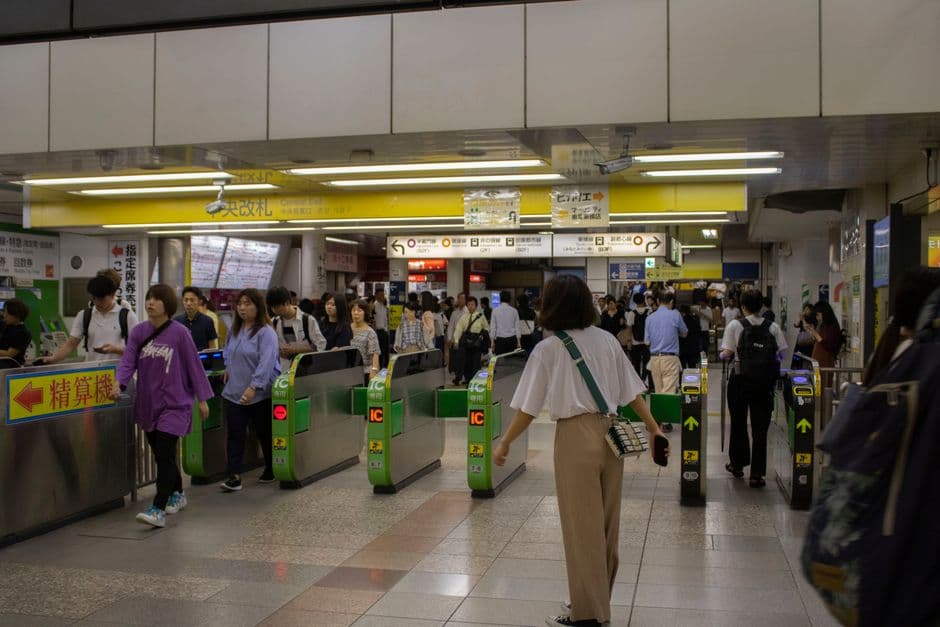
If you cannot avoid Golden Week, commit to the major cities rather than fighting the crowds on scenic routes. Crowds in Tokyo's Shibuya or Shinjuku are thick but manageable. The Philosopher's Path in Kyoto or the deer park at Nara on May 4 are a different kind of miserable.
Book in this order: shinkansen seats first, accommodation second, flights third. The transport is the hardest constraint.
Use the counter-currents. While everyone travels from Tokyo to Kyoto, areas within two hours of Osaka (the Ise-Shima peninsula, Yoshino for late cherry blossoms in a good year, or the Kii Peninsula) are comparatively quiet. Urban Osaka itself empties as residents leave for rural destinations.
Arrive before April 27 or depart before April 28. The surge builds sharply from April 27. A trip that ends April 26 avoids nearly all of it.
Embrace the festival calendar. Golden Week coincides with Hakata Dontaku in Fukuoka (May 3–4, one of Japan's largest street festivals with 2 million attendees) and the Hamamatsu Kite Festival (May 3–5). If you plan around a specific event rather than fighting the crowds, the same density feels like participation rather than inconvenience.