 Electricity Voltages Power Outlets
Japan uses 100V: lower than anywhere else. Your phone charger is likely fine, but your hairdryer or curling iron could be at risk. Here's exactly what to check.
Japan runs on 100 volts: the lowest mains voltage of any country on earth. North America uses 120V; Europe uses 230V. That 20V gap below US/Canadian standard is small enough that most modern electronics handle it without complaint, but it catches out enough travellers that it's worth understanding before you pack.
- Outlet type
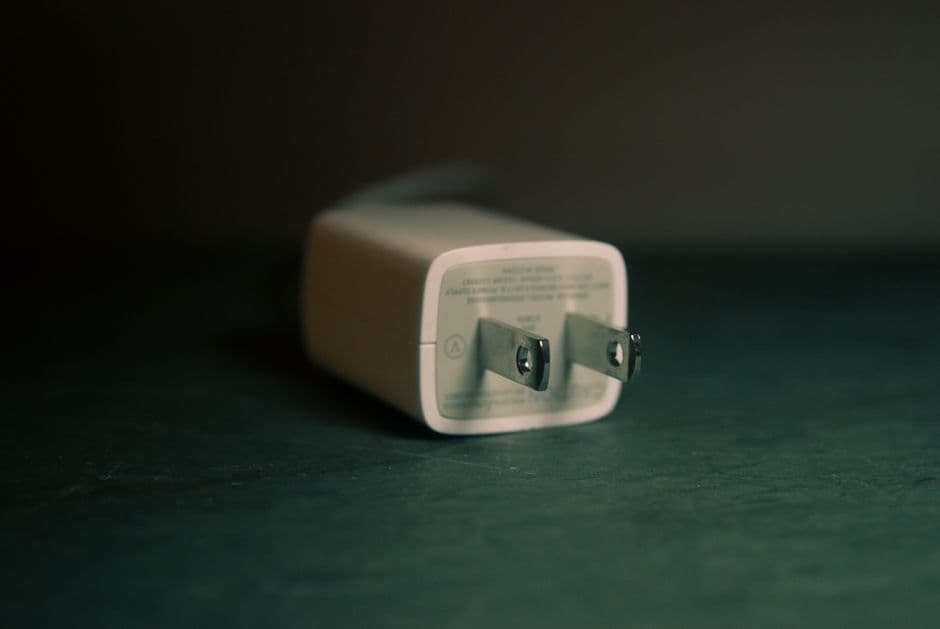
- Type A (same as US)
- Voltage
- 100V (US
- CA: 120V, EU: 230V)
- Frequency
- 50Hz (east)
- 60Hz (west)
- Universal chargers
- Work fine
- Hairdryers
- curlers
- Check label: if "100-240V" OK
The plug: good news first
Japan's outlets are Type A: the two flat parallel prongs identical to North American plugs. If you're travelling from the US or Canada, you need no plug adapter at all. European, Australian, and UK travellers need a simple Type A adapter, available at any major airport or electronics store for under ¥500 (roughly $3).
Japan's outlets are almost always unpolarised (both slots the same width), which means even older US plugs with one wide prong and one narrow prong may need a quick adapter, though in practice most modern outlets accept both.
The voltage: where it gets interesting
At 100V, Japan sits 20V below the North American standard. That sounds minor, but it matters for appliances that generate heat or spin motors.
Universal electronics (safe everywhere):
- Laptops, phones, tablets, cameras
- Any charger or power brick labelled "100–240V": look for this printed on the charger body or the cable brick
- Most shavers sold in the last decade
Appliances that need a closer look:
- Hairdryers and curling irons: the most common problem. A 120V or 230V dryer running at 100V delivers less power, meaning slower heat-up, weaker airflow, and sometimes overheating protection kicking in. A 230V device may not heat at all. Check the label: if it says "100–240V", you're fine. If it says "120V only" or "230V only", either buy a voltage converter (bulky, heavy) or use the hairdryer in your hotel room: almost every Japanese hotel provides one.
- Flat irons / hair straighteners: same rule applies. Many modern travel versions are already dual-voltage.
- CPAP machines: most travel-grade CPAPs are 100–240V, but verify on the label before you pack.
The frequency split: east vs west Japan
Japan has an unusual quirk: the country is divided by frequency. Eastern Japan (Tokyo, Sendai, Sapporo) runs on 50Hz. Western Japan (Osaka, Kyoto, Hiroshima, Fukuoka) runs on 60Hz. This dates to the Meiji era, when Tokyo imported German generators and Osaka imported American ones.
For most travellers this is irrelevant: phones, laptops, and chargers are frequency-agnostic. It matters for:
- Older clocks (wall or travel alarm clocks that rely on AC frequency)
- Some motors in blenders or mixers (if you're renting an apartment long-term)
- Cheap single-voltage converters that are rated for one frequency only
If you're doing a Tokyo-to-Osaka itinerary, don't give this a second thought.
Practical checklist before you land
- Find your charger brick or power supply and read the small print. Look for the input voltage range. "Input: 100–240V~, 50/60Hz" means you're completely safe everywhere in Japan, no converter needed.
- Leave the travel hairdryer at home unless its label says "100–240V". Use the hotel's instead: Japanese hotel hairdryers are consistently good quality.
- Pack a plug adapter only if you're coming from outside North America. Type A adapters are cheap and small.
- Don't pack a voltage converter unless you have a specific single-voltage appliance you cannot replace. Converters are heavy, expensive, and the appliance often works poorly anyway at 100V.
Buy it there
Yodobashi Camera and Bic Camera (both near major train stations) sell universal travel adapters and dual-voltage appliances at reasonable prices. If you arrive and realise you need something, these are your first stops.
The short version: your phone will charge fine. Your laptop will charge fine. Your straightener needs a label check, and your hotel hairdryer is better than whatever you were planning to pack anyway.
Japan outlet voltage
Japan uses Type A and Type B outlets and 100 V electricity; frequency is 50 Hz in eastern Japan and 60 Hz in western Japan. A plug adapter changes the shape, not the voltage, so inspect the input range on hair dryers, shavers and other high-power devices.
 Electricity
 Electricity