 Public Restrooms Local Sanitation Rules
South Korea has excellent public restrooms, but squat toilets still appear, bidet panels can confuse, and the no-paper rule catches many visitors off guard.
South Korea ranks among the world's best countries for public restroom access. The Ministry of the Interior publishes a national "Clean Restroom" certification program, and you can locate any certified facility via the 공공화장실 (gong-gong hwa-jang-sil) map on the official Korea Tourism Organization app. That said, a few habits you've carried from home will get you into trouble here.
Squat Toilets Are Still Common Outside Cities
In major subway stations, department stores, and tourist sites, you'll find Western-style seated toilets as the norm. Step away from those corridors, highway rest stops, older markets, mountain hiking trailheads (including Bukhansan and Seoraksan national parks), and rural bus terminals, and squat toilets (화변기, hwa-byeon-gi) appear regularly.
Squat toilet mechanics for the uninitiated:
- Face the hooded (flushing) end, not away from it.
- Keep your weight on the balls of your feet, heels flat to the floor or slightly raised.
- The flush handle or button is almost always on the wall behind you.
Stalls in mixed-type restrooms mark the toilet style with a pictogram on the door. When in doubt, the stall at the far end of the row is statistically more likely to be Western-style (and less used).
The No-Paper-in-the-Bowl Rule
This is the single most important rule for visitors: do not flush toilet paper down the toilet. Older South Korean sewer infrastructure was built with narrow pipes that clog easily. Even in modern buildings, many facilities maintain the tradition: used paper goes into the waste bin (휴지통) beside the toilet.
Exceptions exist, newer high-rises and premium hotels have upgraded plumbing that handles paper, and some stalls post a sign (in Korean and sometimes English) confirming you may flush. When no sign is present, use the bin.
Bidet Panels: Reading the Buttons
South Korea is one of the highest bidet-adoption countries in the world. Coway, Bidet Korea (노비타), and Toto units are standard in apartments, hotels, and newer public facilities. The control panel is almost always on the right-side armrest or wall panel.
Standard button layout (left to right):
- 후방 (hu-bang), rear wash
- 비데 or 전방 (bi-de / jeon-bang), front wash
- 건조 (geon-jo), warm air dry
- 정지 (jeong-ji), stop
The 수압 (su-ap) or pressure dial adjusts water intensity. The 온도 (on-do) setting controls water temperature. When you first sit, the seat is often pre-warmed, this is intentional, not a malfunction.
Finding Restrooms in Practice
- Subway stations: Every Seoul Metro and Busan Metro station has a restroom, usually near the fare gates. Signage is bilingual.
- Convenience stores (GS25, CU, 7-Eleven): Staff are legally required to allow restroom access on request in South Korea under the 공중화장실 등에 관한 법률 (Public Toilet Act, revised 2022). Ask at the counter, they will almost always comply.
- Street-level: In tourist districts like Myeongdong or Insadong, look for the blue-and-white 화장실 signs mounted on lamp posts. Seoul city government installed over 1,400 directional signs across the central wards.
Hygiene Supplies and What to Carry
Paper is not guaranteed in squat-toilet stalls, particularly at hiking trailheads and rural rest areas. Carry a small pack of Yuhan-Kimberly Kleenex tissues (sold at every convenience store, roughly 800 KRW for a pocket pack) and a travel-size hand sanitizer. Soap dispensers are standard in cities; elsewhere, liquid soap can run out.
Quick habit to build
Before you sit or squat, check the stall for a bin. If there is one, that is your signal, paper goes in the bin, not the bowl. This one check prevents 90 pct of plumbing complaints in Korean guesthouses.
Gender signage uses 남 (nam, male) and 여 (yeo, female), usually with universal icons. In some older facilities, only Korean text appears, memorise the two characters before you travel.
 Public Restrooms

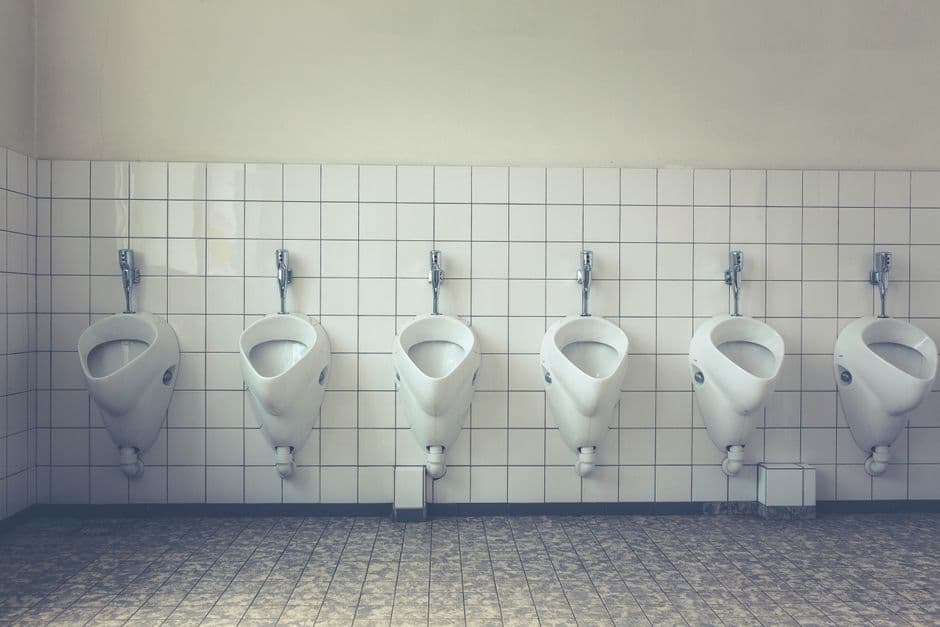
 Public Restrooms