
Short flight, groggy landing? Find out if true jet lag is possible on brief routes and how to tell it apart from travel fatigue.
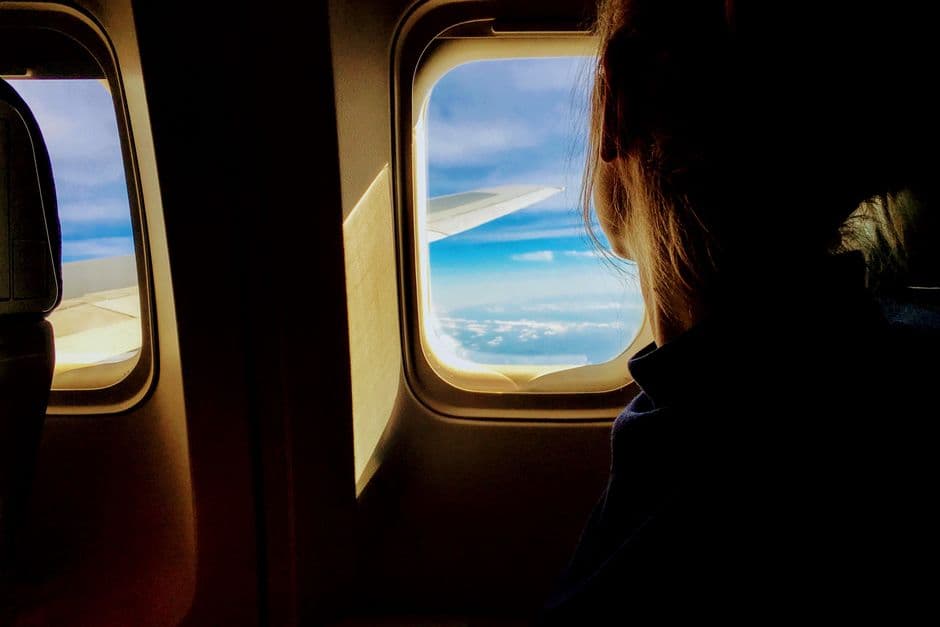
True jet lag requires crossing time zones — not just enduring a long flight. A 4-hour hop from Paris to Dubai (UTC+4) shifts your clock enough to trigger it. A 6-hour red-eye within Europe does not.
What Jet Lag Actually Is
Jet lag is a circadian rhythm disorder classified by the International Classification of Sleep Disorders (ICSD-3, code 307.45-0). It occurs when your internal body clock — governed by the suprachiasmatic nucleus in the hypothalamus — falls out of sync with the local light-dark cycle at your destination.
The key driver is light exposure at the wrong local time, not flight duration or cabin pressure. Your body clock does not know you were on a plane; it only knows when sunlight hits your retinas.
Rule of thumb
Jet lag needs a time-zone shift, not just flight time. Crossing fewer than 3 time zones rarely causes true jet lag.
Research published in the journal Sleep Medicine Reviews confirms that symptomatic jet lag typically requires crossing at least 3 time zones. Crossing 2 or fewer zones may cause mild, transient sleep disruption — but that resolves within 24 hours without treatment and does not meet clinical criteria for jet lag.
Short Flight, Real Suffering — What Is That, Then?
If you land from a 2-hour flight feeling wrecked, you are almost certainly experiencing travel fatigue, not jet lag. The symptoms overlap, which fuels the confusion.
Travel fatigue causes:
- Cabin air dehydration (humidity in most aircraft cabins sits at 10–20 pct, vs. 40–60 pct at home)
- Cabin altitude equivalent of ~8,000 ft (2,438 m), which lowers blood oxygen saturation by roughly 4 pct
- Sleep disruption from early departures or overnight schedules (without time-zone shift)
- Stress, restricted movement, and noise-induced cortisol spikes
How to tell them apart:
| Travel Fatigue | True Jet Lag | |
|---|---|---|
| Resolves after | 1 sleep cycle | 1 day per time zone crossed |
| Cause | Physical stress of travel | Circadian misalignment |
| Typical triggers | Any flight | Flights crossing 3+ time zones |
| Melatonin helps? | Marginally | Yes, significantly |
| Light therapy needed? | No | Often yes |
Routes Where Short Flights Do Cause Jet Lag
Distance and duration are irrelevant. What matters is eastward or westward displacement.
Examples of short-ish flights with real jet lag potential:
- London Heathrow (LHR) to Reykjavik (KEF): ~2h 50m, but Iceland is UTC+0 year-round while the UK uses BST (UTC+1) in summer — minimal shift, rarely symptomatic.
- New York JFK to Bogota (BOG): ~5h, but only 1 time zone west (or no shift at all depending on daylight saving time) — no clinical jet lag.
- Los Angeles LAX to New York JFK: ~5h 30m, 3 time zones east — this frequently causes jet lag symptoms, especially on early departures.
- Dubai DXB to Mumbai BOM: ~3h, but a 1h 30m shift — unlikely to cause true jet lag.
The LAX-JFK example is why many West Coast executives arrive in New York, sleep poorly, and wake at 4 AM feeling alert: their body clock still reads California time.
Los Angeles → New York
Pergeseran tidur sebelum perjalanan
- Ke timur lebih sulit: hari Anda dipersingkat.
- Beberapa hari sebelumnya, tidur dan bangun sekitar 1 jam lebih awal setiap hari.
- Saat tiba, dapatkan cahaya pagi yang terang dan hindari cahaya di malam hari.
- Tidur siang singkat sebelum pukul 15.00 saja; pergi keluar pada hari kedatangan.
Direction Matters More Than You Think
Eastward travel is consistently harder than westward. Your circadian clock naturally runs slightly longer than 24 hours (closer to 24.2 hours), making it easier to delay sleep (westward, gaining time) than to advance it (eastward, losing time).
Going east across 3 time zones? Expect 3 days of adjustment at roughly 1 zone per day. Going west across the same 3? Most people adapt in 1–2 days.
What to Do If You Suspect Your Short Flight Caused Real Jet Lag
- Confirm the shift: If you crossed fewer than 3 zones, treat it as travel fatigue — hydrate aggressively, get one full night of sleep, avoid napping past 20 minutes.
- 3+ zones east: Take 0.5–3 mg of fast-release melatonin (brands: Natrol, MidNite) at your destination's target bedtime for 2–3 nights. Timing precision matters more than dose size.
- Light exposure: Seek morning sunlight at the destination to anchor your clock. Avoid bright light at night. The Timeshifter app (developed with circadian researcher Steven Lockley of Harvard Medical School) generates a personalised light/melatonin plan.
- Skip the sleep aids: Antihistamine-based products like Benadryl (diphenhydramine) sedate you but do not reset circadian rhythms — and impair cognitive function for hours after waking.
The single most useful question to ask before any flight: "How many time zones am I crossing?" If the answer is 2 or fewer, jet lag is not your problem.

 Flights
 Medication