 Driving Road Rules
Drive right in Taiwan like a local: lane rules, road hierarchy, speed limits, and flow patterns every visiting driver must know before hitting the freeway.
Taiwan drives on the right-hand side, the same as continental Europe and North America. If you're arriving from the UK, Australia, Japan, or Thailand, that single fact rewires every instinct you have behind the wheel. Give yourself a conscious mental reset before you leave the rental lot.
The Road Hierarchy You'll Actually Use
Taiwan's network has four layers relevant to visitors:
- National Freeways (國道, Guódào), fully grade-separated, 90–110 km/h, all-ETC tolling (see below). The backbone is Freeway No. 1 (Taipei to Kaohsiung) and Freeway No. 3 (parallel western spine).
- Provincial Highways (省道, Shěngdào), numbered with a "台" prefix (e.g., 台9, the east-coast Highway 9). Two lanes in each direction on flat stretches, single lanes through mountain passes. Speed limit typically 60–80 km/h.
- County Roads (縣道), local connectors, usually 50 km/h, often unmarked at junctions.
- Township Roads (鄉道), narrow, sometimes unpaved, no shoulder. Treat these as single-track even when the map says otherwise.
Lane Discipline on Freeways
Keep right except to pass is the law under the Road Traffic Management and Penalty Act (道路交通管理處罰條例, Article 33). In practice:
- The leftmost lane is the overtaking lane. Sitting in it is a fineable offence (NT$600–NT$1,800 for private vehicles).
- The rightmost lane on a three-lane freeway doubles as an on-ramp merge zone. Signal early and yield to merging traffic rather than forcing them to brake.
- Trucks and buses must stay in the rightmost lane on all freeways unless overtaking, they won't always comply, especially on grades, so leave extra following distance.
- Motorcycles below 150cc are prohibited on freeways; those above 150cc use the far-right shoulder lane marked with dashed blue lines on Freeway No. 1 and No. 3.
Speed Limits and Enforcement
| Road type | Default limit |
|---|---|
| Freeway (flat) | 110 km/h |
| Freeway (mountain section) | 90 km/h |
| Provincial highway | 60–80 km/h |
| Urban arterial | 50 km/h |
| Residential / school zone | 30 km/h |
Fixed speed cameras are common on freeways and are publicly mapped in navigation apps like Google Maps TW and i-Freeway (the official Freeway Bureau app). Section-average cameras (區間測速) measure your average speed between two gantries several kilometres apart, there is no way to brake-and-accelerate your way past them.
ETC Tolling: You Must Sort This Before the Freeway
All National Freeways use electronic tolling only since 2014. There are no cash booths. Visiting drivers have two options:
- Rent a vehicle with an eTag transponder (most major rental companies include one, confirm at booking). The tag deducts tolls automatically from a linked account the rental company manages; you pay reconciliation charges at return.
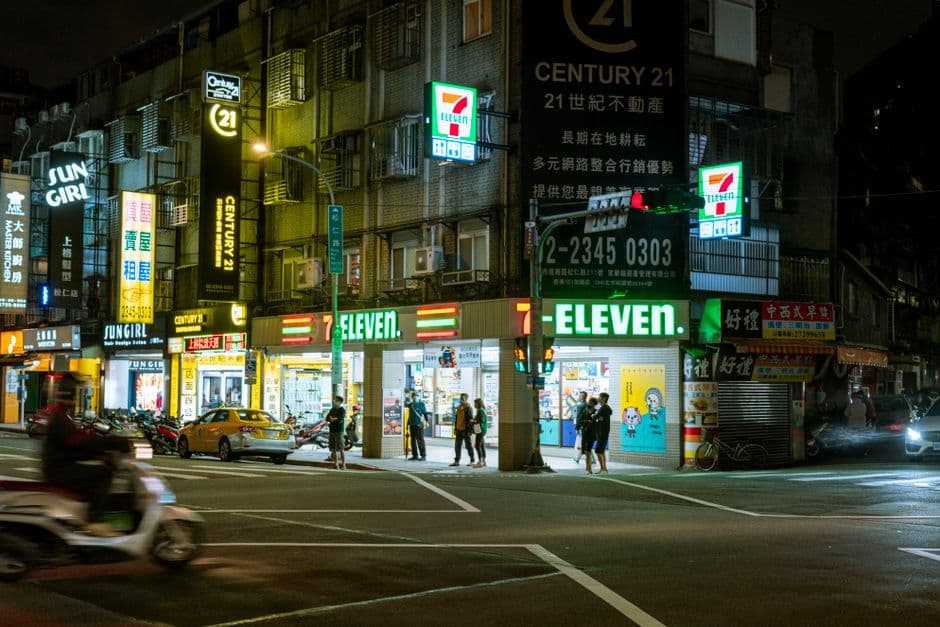
- Pay within 48 hours via the eTagPay website or 7-Eleven / FamilyMart kiosks using the licence plate number. Miss the window and a surcharge of NT$300 per unpaid toll applies.
Don't skip the ETC check
Driving a freeway without a working eTag and no subsequent payment results in accumulating fines that surface when you return the car, or, if the plate is flagged, at the border. Verify the transponder is mounted and active before merging onto any Guódào.
Key Flow Patterns at Intersections
- Right turns on red are not permitted in Taiwan unless a sign specifically allows it (the opposite of the US rule).
- Box junctions (黃網線) in Taipei and other major cities: do not enter unless your exit is clear. Cameras enforce this in Taipei City.
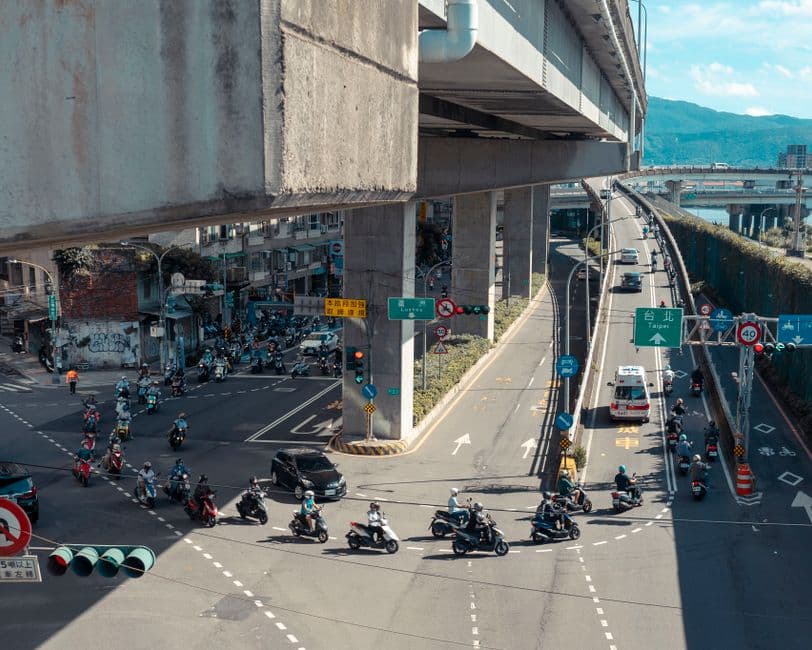
- Scooter waiting zones (機慢車待轉區): at many urban intersections, a two-stage left-turn box sits diagonally ahead. Scooters pull forward into it to complete left turns in two phases. As a car, you turn left on the green in a single motion from the leftmost lane, but expect a dense swarm of scooters around you. Slow, signal, and be patient.
- Priority roads: Taiwan does not use the European "priority road" diamond sign. At unsigned intersections, the driver on the right has right of way, but treat every unsigned junction as a yield situation regardless.
Driving Taiwan's roads rewards calm and predictability. Signal every move, maintain lane position, and assume the scooter you cannot see yet is there. The roads themselves are well-maintained and well-signed in both Chinese and romanised English above Freeway level.
 Driving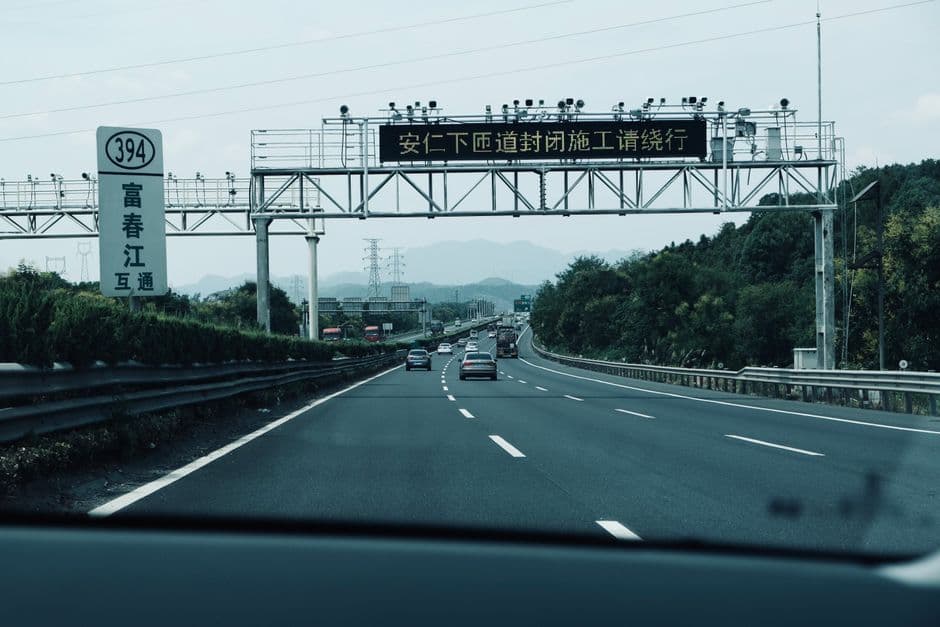
 Driving