 Language Communication
Master Mandarin's four tones before landing in Taiwan. Real examples, common errors, and drills that stop embarrassing mix-ups at restaurants and markets.
Getting tone wrong in Mandarin doesn't just sound odd, it changes the word entirely. Say mā (媽, mother) with a falling-rising tone and you've just said mǎ (馬, horse). That gap matters on your first day in Taipei when you try to compliment someone's cooking and accidentally mention livestock.

The Four Tones at a Glance
Mandarin Chinese is a tonal language with four distinct tones plus a neutral (fifth) tone. In Taiwan, the standard is Zhuyin (注音符號, also called Bopomofo) rather than Pinyin, but both systems mark the same four tones. Here is what each one sounds like:
- Tone 1 (ā), flat, high, sustained. Like holding a musical note. "mā" = 媽 (mother)
- Tone 2 (á), rising, as if asking a question in English. "má" = 麻 (hemp, or "numb")
- Tone 3 (ǎ), falls then rises, the longest tone. "mǎ" = 馬 (horse)
- Tone 4 (à), sharp fall, short and decisive. "mà" = 罵 (to scold)
- Tone 5 (neutral), quick, light, unstressed. "ma" = 嗎 (question particle)
The Mistakes Foreigners Make Most
Tone 3 overdone
Most learners exaggerate Tone 3 into a full dip-and-rise every time. In natural speech, when Tone 3 appears before another syllable, it almost always shortens to a half-third tone, just the falling part, no rise. Saying a full dipping tone before every syllable marks you immediately as a textbook learner.
Conflating Tone 1 and Tone 2
English speakers tend to let Tone 1 drift upward by the end of the syllable (a reflex from English intonation). That drift pushes it toward Tone 2. Hold Tone 1 flat and high throughout the syllable, imagine a ruler at the top of your pitch range.
Losing tone under stress
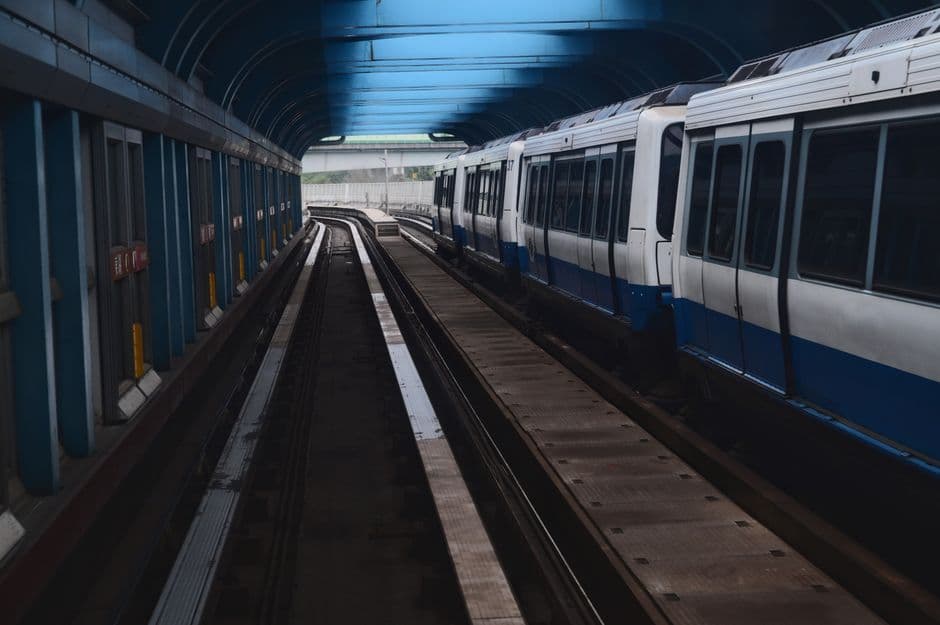
When nervous, ordering at a busy Shilin Night Market stall or asking for directions in the MRT, foreigners drop to a flat mumble and abandon tones entirely. Vendors and locals are good at guessing from context, but in pharmacies or medical settings that guessing becomes a real problem.
Tone sandhi with Tone 3
Two consecutive Tone 3 syllables? The first one automatically becomes Tone 2 in pronunciation, though it is still written as Tone 3. "Nǐ hǎo" (你好) is pronounced more like "Ní hǎo." This is called tone sandhi and it trips up anyone who only practised from reading Pinyin cards.
Practical Drills That Work in Taiwan
Pair real objects with tones. The syllable "mai" covers both 買 (mǎi, to buy, Tone 3) and 賣 (mài, to sell, Tone 4). At any night market, you will either buy or sell, drilling those two in context is more memorable than abstract repetition.
Use LINE app voice messages. WhatsApp is less common in Taiwan; LINE dominates. Record yourself saying a phrase, play it back, and compare it against a reference on Forvo.com, which has native Taiwanese Mandarin speakers for most common words.
Ask for a receipt at 7-Eleven. The phrase is "wǒ yào fāpiào" (我要發票). It is low-stakes, repeated dozens of times a day in stores, and has three tones in a row. Convenience store staff will understand even with minor errors, making it a safe real-world repetition drill.
One tonal anchor per day
Pick a single Tone 4 word you will need that day, 去 (qù, to go) or 對 (duì, correct), and make sure it falls sharply every time you say it. One tone nailed per day beats twenty tones half-learned.
Why Taiwan Is a Good Place to Learn
Taiwanese Mandarin speakers tend to speak more slowly and clearly than in some mainland cities, making tone distinctions easier to perceive. The Zhuyin system used in schools links tones to visual marks you see everywhere from children's books to MRT signage. Even convenience store receipts carry Traditional Chinese characters with tone marks in children's editions. Lean into that environment: read signs aloud, catch your tones, correct in real time.
Tones are not an optional layer of Mandarin, they are the word. Get them wrong and you change the meaning. Get them right and Taiwan opens up in a way that no translation app can replicate.
 Language
 Language