 Cultural Taboos Non Verbal Body Language
Western hand signals often mean something completely different in Japan. Here are the gestures that confuse tourists most, decoded.
In Japan, your hands can lie. The beckoning curl that says "come here" in Europe signals "go away" here. The index finger you'd use to point at a price tag is considered rude in most social contexts. And that friendly side-to-side wave you instinctively throw at a shopkeeper? It means "no" or "I cannot help you." Understanding these inversions before you land saves real awkward moments.
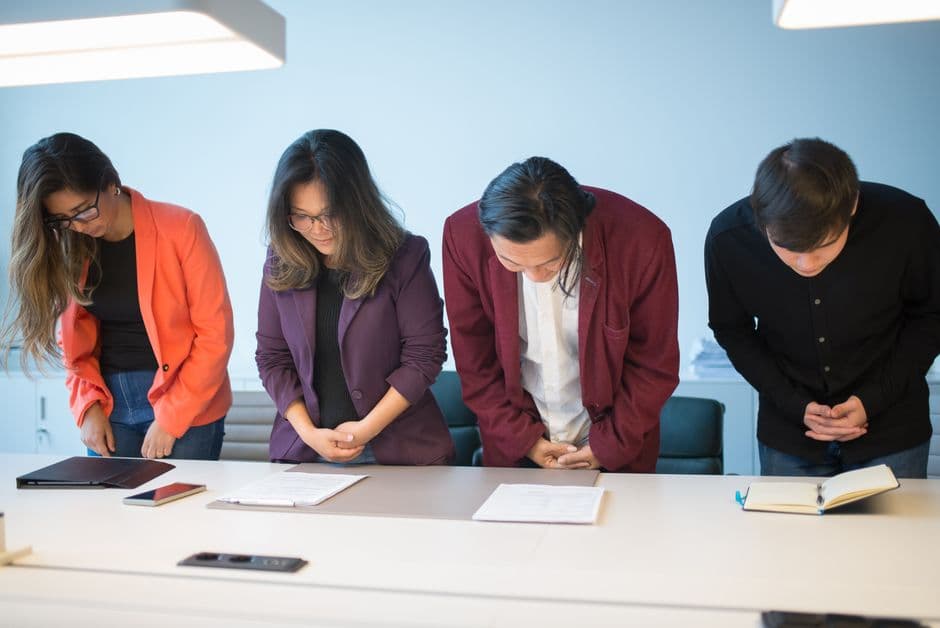
- A small bow is a polite greeting and thank-you.
- Tipping — it's not expected and can confuse staff.
- Eating or drinking while walking.
Beckoning: Down, Not Up
The Western beckoning gesture, hand raised, fingers curling upward toward you, is used in Japan to call animals or, in some contexts, to signal contempt. It carries a condescending undertone when directed at people.
The correct Japanese beckoning gesture is the opposite: arm extended forward or downward, palm facing the floor, fingers curling downward. You'll see restaurant staff and hotel concierges use this constantly. If someone does this at you, they want you to follow or approach. Practice it before you land. It feels unnatural to Westerners at first, but it becomes second nature within a day or two.
Pointing: Use Your Whole Hand
Pointing with a single extended index finger is considered impolite, even aggressive, in many Japanese social contexts. It is associated with accusing or singling out. Children are actively taught not to do it.
The polite alternative is the open-palm gesture: hand flat, fingers together, arm extended gently in the direction you mean. This is how Japanese guides indicate a landmark, how shop staff direct you to a section, how someone shows you where to queue. When you need to indicate something, a dish on a menu, an item on a shelf, use your whole open hand rather than a finger.
The Hand Wave Means "No"
Waving your hand side to side in front of your face (like fanning yourself) means "no" or "I'm not worthy/I cannot help you", not hello. Japanese people rarely wave as a greeting the way Westerners do.
The Face-Fan Wave
If you raise your hand and wave it side to side in front of your own face, you are communicating either "no, I don't have that" or a form of self-deprecating refusal ("I'm not good enough" / "I cannot"). You'll see it constantly: at a konbini when a product is out of stock, from a restaurant host when a table isn't ready, from a local who doesn't speak English and is politely declining to try.
Do not interpret this as a wave of greeting. And do not use it yourself unless you intend to refuse something.
Nodding and the Nod That Means Nothing
A nod in Japanese conversation does not necessarily signal agreement. "Hai" (yes) plus nodding often means "I hear you" or "I am listening," not "I agree" or "I will do that." This is one of the most commercially costly misreads for business travellers: a supplier who nods repeatedly through a negotiation may simply be acknowledging your words, not committing to terms.
In a tourist context, this matters when you ask for help: a local nodding while you describe your destination does not mean they know where it is. Watch for the pause, the slight intake of breath, and the polite non-committal reply that follows.
The Cross (Batsu): Both Arms or One
Crossing your forearms in front of your chest, an X shape, is the universal Japanese signal for "no," "wrong," "not available," or "closed." You'll see it from cashiers (wrong payment method), from staff at a full restaurant, and from anyone physically stopping you from entering a space.
A single hand version exists too: one arm raised, bent at the elbow, forming a rough X with the forearm over the chest or face. Same meaning, slightly softer register.
If a staff member makes this gesture at you, stop. Don't push past it expecting to negotiate. It is a firm, culturally unambiguous signal.
Bowing: Depth Signals Formality
You already know bowing is important. What surprises most visitors is the reciprocal escalation dynamic: if you bow slightly to a shopkeeper who bows back with a deeper bow, etiquette suggests you should then bow again, slightly deeper. This can loop. Japanese people will graciously break the cycle first. Let them.
A shallow bow of 15 degrees is a casual acknowledgment. Thirty degrees is respectful and appropriate for most tourist interactions: thanking a host, leaving a restaurant, meeting someone formally. You do not need to bow to cashiers at convenience stores, though a small nod of acknowledgment is always well received.
These gestures form a system. Learn the handful that reverse your instincts and you'll read Japanese public spaces much more accurately from your first hour on the ground.
 Cultural
 Cultural